The Pasture
The opening poem of North of Boston: a farmer heads out to clean a spring and fetch a newborn calf, then turns to invite us along — “You come too,” the gesture that became Frost’s threshold to all that follows.
Theme
5 poems
The opening poem of North of Boston: a farmer heads out to clean a spring and fetch a newborn calf, then turns to invite us along — “You come too,” the gesture that became Frost’s threshold to all that follows.
Often called Frost’s most harrowing poem, “Acquainted with the Night” walks a rain-soaked city in Dante’s circling terza rima — averted eyes, an indifferent moon, and a night the speaker knows too well.
Robert Frost’s “After Apple-Picking” watches a weary farmer drift from the day’s harvest toward sleep, apples swimming behind his eyes — one of his great meditations on labor, satiety, and the sleep that may be death.
Robert Frost’s nine-line miniature takes up an ancient question — how will the world end? — and answers it as casually as a private bet. Fire or ice, desire or hate: the speaker has tasted both, and finds either one would do. What begins as cosmic speculation narrows quietly into something far more personal, until the destruction of the world rests on the flattest possible word — that ice “would suffice.” It is one of Frost’s shortest and most quoted poems, and one of his most quietly devastating.
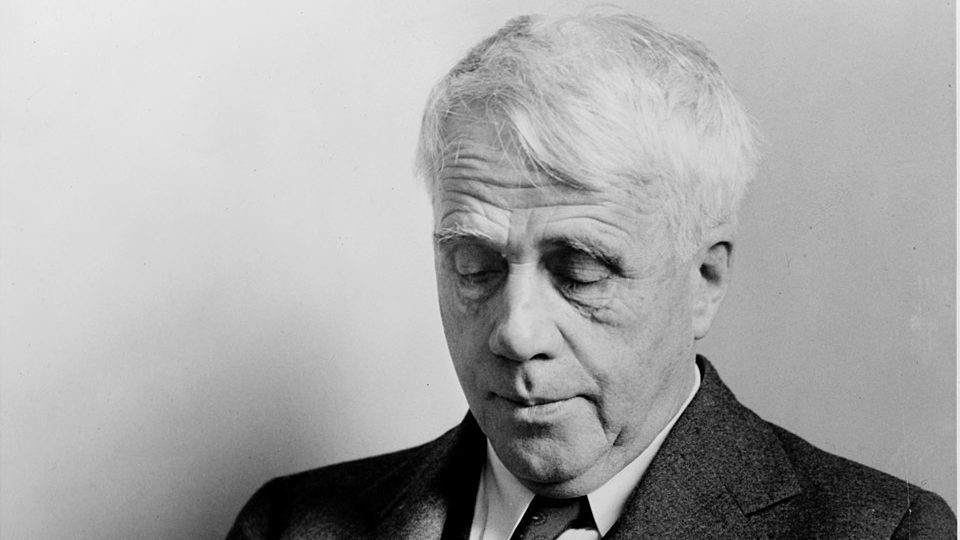
Robert Frost (1874–1963), the four-time Pulitzer winner who kept traditional form alive in the modernist age, found whole worlds in stone walls, snowy woods, and forking roads.