QUICK FACTS
Born: June 2, 1840 · Higher Bockhampton, Dorset, England
Died: January 11, 1928 · Dorchester, Dorset, England (aged 87)
Era: Victorian (into the modern era)
Occupation: Poet; novelist
Education: Trained as an architect
Known for: “The Darkling Thrush”; the elegies for Emma; the Wessex novels
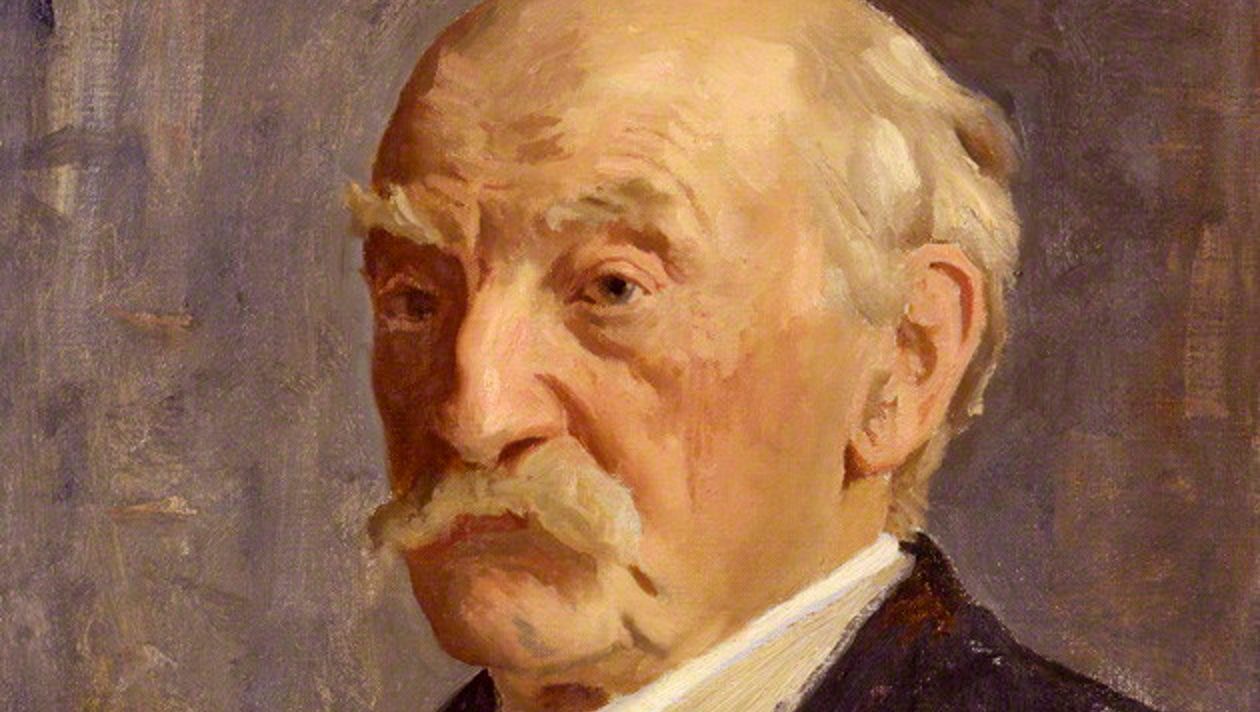
Thomas Hardy (1840–1928) was one of the great English writers of the past two centuries — a celebrated novelist who, in middle age, turned away from fiction and devoted his last three decades wholly to poetry. He considered himself a poet first, and his verse, plain-spoken and deeply moving, has come to be ranked among the finest in the language.
Spanning the late Victorian and early modern worlds, Hardy wrote of love and loss, time and chance, and the indifference of a vast universe to human longing. His poems set unsentimental honesty against tender feeling — nowhere more powerfully than in the elegies he wrote after the death of his first wife.
On This Page: Early Life and Education · Literary Career and Major Works · Style and Themes · Later Life and Legacy · Notable Poems · Frequently Asked Questions · Related Poets
Early Life and Education
Hardy was born on June 2, 1840, in the Dorset hamlet of Higher Bockhampton, the countryside he would transform into his fictional “Wessex.” His father was a stonemason and builder; his quick-minded mother fed his early love of reading.
After local schooling, he was apprenticed to a Dorchester architect and trained in church restoration, and in 1862 he moved to London for architectural work. There he read Darwin, Mill, and Comte, whose ideas about evolution and human limitation marked him for life. But the city left him uneasy, and by the late 1860s he had returned to Dorset, determined to live by writing about the rural world he knew.
Literary Career and Major Works
Hardy made his name as a novelist before becoming, in his own eyes, what he had always been: a poet. A string of novels — Far from the Madding Crowd (1874), The Return of the Native (1878), The Mayor of Casterbridge (1886), Tess of the d’Urbervilles (1891), and Jude the Obscure (1895) — established him as one of the major novelists of the age, chronicling rural England under the strain of modern life. But the furious reception of Jude, attacked for its candor about sex and religion, helped drive him from fiction for good.
He turned to the poetry he had written privately for decades, publishing Wessex Poems (1898) and, over the following thirty years, volume after volume — among them Satires of Circumstance (1914) and Moments of Vision (1917) — until his Collected Poems (1919) confirmed him as one of the most distinctive poetic voices of his time.
Style and Themes
Hardy’s poetry joins Victorian realism to the fatalism of classical tragedy. His language is plain and sturdy, shaped by rural speech and the cadences of the Bible, and he favored irony and understatement over display.
His great subjects are the fragility of human happiness and the impersonal forces — chance, time, an indifferent nature — that govern it; in his universe nature is neither kind nor cruel, but simply there, and love and memory become forms of quiet resistance. The elegies he wrote after the death of his first wife, Emma, in 1912 rank among the most moving poems of grief in English.
Though the Modernists set out to break with the Victorians, Eliot and Pound admired Hardy’s sincerity and craft, and his honesty about ordinary life shaped later poets from Philip Larkin to Seamus Heaney.
Later Life and Legacy
Honors and quiet productivity marked Hardy’s old age.
In 1914, he married Florence Dugdale, his secretary, who became his companion and biographer. He went on writing poetry into his eighties, refining rather than softening his vision; he declined a knighthood but accepted the Order of Merit in 1910 and lived as a revered national figure at Max Gate, the Dorchester house he designed himself. He died there on January 11, 1928, at eighty-seven. His funeral captured the doubleness of his life: his ashes were placed in Poets’ Corner in Westminster Abbey, while his heart was buried at Stinsford, in Dorset, beside Emma.
He is remembered as the last great Victorian and a forerunner of modern poetry — a writer who faced change and loss without illusion, and found a stark beauty in them.
Notable Poems
These are the Hardy poems most worth starting with:
- The Darkling Thrush: His most famous poem — at the turn of the century, a frail thrush sings out against a bleak winter landscape, hinting at a hope the speaker cannot share.
- Neutral Tones: A spare, bitter early lyric of a dead love, remembered beside a winter pond.
- The Voice: One of his great elegies for his first wife, Emma — the speaker hears, or imagines, her calling to him across the years.
- During Wind and Rain: A haunting poem of a family’s happy past dissolving under time’s erosion, each bright scene undercut by the falling years.
- The Convergence of the Twain: A coldly magnificent meditation on the sinking of the Titanic, where ship and iceberg move toward their fated meeting.
- Afterwards: A late, tender poem imagining how Hardy might be remembered after death — as a man who “noticed” the small things of the world.
Frequently Asked Questions
Quick answers to the questions readers most often ask about Thomas Hardy.
What is Thomas Hardy best known for?
Two things: his Wessex novels, such as Tess of the d’Urbervilles and Far from the Madding Crowd, and his poetry, especially “The Darkling Thrush” and the elegies for his first wife. He thought of himself above all as a poet.
Was Thomas Hardy a novelist or a poet?
Both, at different times. He won fame first as a novelist, then gave up fiction after 1895 and spent his last three decades writing the poetry he valued most. Today he is regarded as a major figure in each form.
Why did Hardy stop writing novels?
The hostile reception of Jude the Obscure (1895), condemned for its frank treatment of sex and religion, soured him on fiction, and he turned fully to poetry, which had always been his first love.
What is “The Darkling Thrush” about?
Written at the close of 1900, it sets a frail old thrush singing joyously against a bleak, wintry landscape, leaving the speaker to wonder whether the bird knows some hope that he himself cannot feel.
What are the main themes in Hardy’s poetry?
Love and loss, memory and regret, the passing of time, and the indifference of fate and nature to human happiness — met with irony, compassion, and unflinching honesty.
Related Poets
Readers who admire Hardy often turn to these poets:
- Matthew Arnold: An earlier Victorian who shared Hardy’s elegiac doubt and sense of a faith ebbing away.
- Alfred Tennyson: The Victorian laureate whose grief-poetry stands behind Hardy’s own elegies.
- Gerard Manley Hopkins: A contemporary who wrestled, very differently, with nature, God, and despair.
- A. E. Housman: A close contemporary whose spare, fatalistic lyrics of rural England closely echo Hardy’s mood.
- Philip Larkin: A major 20th-century poet who revered Hardy and took him as a model of plain, truthful feeling.