QUICK FACTS
Born: July 28, 1844 · Stratford, Essex, England
Died: June 8, 1889 (aged 44) · Dublin, Ireland
Era: Victorian
Occupation: Poet and Jesuit priest
Education: Balliol College, Oxford
Known for: Sprung rhythm and the concepts of “inscape” and “instress”
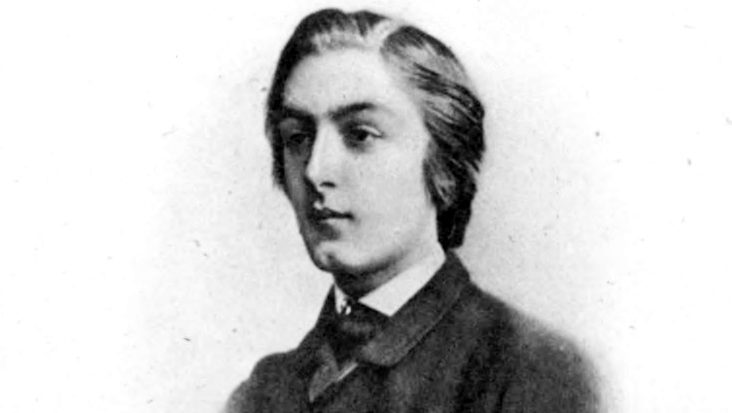
Gerard Manley Hopkins (1844–1889) was one of the most original and spiritually charged poets of the nineteenth century, a writer who reimagined the possibilities of rhythm, language, and faith in English verse. Almost none of his poetry appeared in print during his lifetime, yet its posthumous influence on modern poetry has been immense.
A Jesuit priest as well as a poet, Hopkins fused intense religious devotion with radical experiment, forging a style he called “sprung rhythm” to catch the living pulse of natural speech. His work holds divine beauty and human despair in the same hand, the obedience of the priest pressing constantly against the freedom of the artist. Today he is read as a forerunner of modernism, a poet whose ear changed how English poetry sounds.
ON THIS PAGE
Early Life and Education · Literary Career · Style and Themes · Later Life and Legacy
Notable Poems · FAQ · Related Poets
Early Life and Education
Hopkins was born on July 28, 1844, in Stratford, Essex (now part of London), the eldest of nine children in a devout and cultivated Anglican family. His father, Manley Hopkins, was a marine insurance adjuster and a published poet; his mother, Catherine, gave him a lasting love of music and the Bible. He won early distinction at Highgate School before going up to Balliol College, Oxford, where he read classics under Walter Pater and Benjamin Jowett.
At Oxford he was drawn into the Oxford Movement, the revival that sought to recover Anglicanism’s Catholic roots, and under the influence of John Henry Newman he converted to Roman Catholicism in 1866 — a step that estranged him from family and friends and shaped the rest of his life. Two years later he entered the Society of Jesus, taking on the austere discipline of Jesuit formation. On joining, he burned his early verse and gave up writing poetry as an act of renunciation, though the imaginative restlessness never left him.
Literary Career and Major Works
Hopkins’s poetic voice returned in 1875 after he read of the wreck of the German steamship Deutschland, in which five Franciscan nuns drowned while fleeing anti-Catholic laws. His response, “The Wreck of the Deutschland,” marked both his return to writing and the arrival of his mature style — dense, musical, ecstatic, full of compound words and driving rhythm. His Jesuit superiors admired his piety but found the poem baffling, and it stayed unpublished.
Over the next decade he produced a small but extraordinary body of work. The nature sonnets — “God’s Grandeur,” “Pied Beauty,” “The Windhover” — praise the divine energy he saw running through the created world, what he called “inscape,” the unique inner form of each thing. Later came the “terrible sonnets,” among them “Carrion Comfort” and “No Worst, There Is None,” which face spiritual desolation and the felt absence of God with unflinching honesty. None of these poems were published while he lived. Only after his death did his friend Robert Bridges edit and release Poems of Gerard Manley Hopkins (1918), revealing a voice decades ahead of its time.
Style, Themes, and Influence
Hopkins’s great technical innovation was sprung rhythm, a meter built on the count of stresses rather than syllables. By letting stressed beats fall in clusters, he could imitate the cadence of ordinary speech, birdsong, and prayer, producing verse that feels at once spontaneous and tightly patterned. His lines brim with coined compounds, internal rhyme, and onomatopoeia, a music that binds the physical and the spiritual together.
His themes follow from his faith. “Inscape” names the distinctive identity of each created thing; “instress” names the divine force that holds it in being, and to perceive either was, for Hopkins, an act of worship. Against that devotion runs a current of isolation and self-doubt, especially in the late sonnets, anticipating the psychological candor of twentieth-century poetry. His compression of language and radical rhythm can be heard later in T. S. Eliot, W. H. Auden, Dylan Thomas, and Seamus Heaney, all of whom prized his musicality and spiritual depth.
Later Life and Legacy
Hopkins spent much of his priestly career teaching and preaching across England, Scotland, and Ireland. The work suited his conscience but not his temperament, which tended toward melancholy. In 1884 he was appointed Professor of Greek at University College Dublin, where loneliness and recurring depression weighed heavily on him, yet he kept writing some of his most searching poems, faith tested by suffering.
He died of typhoid fever on June 8, 1889, at the age of forty-four, and was buried at Glasnevin Cemetery in Dublin. When Poems of Gerard Manley Hopkins finally appeared in 1918, readers were astonished by its originality, and by 1930 his work was being hailed as one of the great literary advances of the previous century. He is now read as a bridge between Victorian faith and modernist form, a poet whose language continues to startle and console in equal measure.
Notable Poems
A short path into Hopkins’s small but concentrated body of work.
- The Wreck of the Deutschland: His 1875 breakthrough, written after a shipwreck drowned five exiled nuns; it launched his mature style and his sprung rhythm.
- God’s Grandeur: An 1877 Petrarchan sonnet insisting that divine energy still charges a world worn down by industry and toil.
- Pied Beauty: A 1877 hymn of praise for “dappled things” and the dazzling variety of creation.
- The Windhover: His ecstatic 1877 sonnet on a kestrel in flight, where the bird becomes a vision of Christ’s mastery and grace.
- Carrion Comfort: One of the “terrible sonnets” of the mid-1880s, a wrestling-match with despair and the hidden presence of God.
- No Worst, There Is None: A companion late sonnet on the depths of spiritual anguish, unsparing in its honesty.
Frequently Asked Questions
The questions readers most often ask about Hopkins and his work.
What is Gerard Manley Hopkins best known for?
He is best known for inventing sprung rhythm and for his intense devotional nature poems, such as “God’s Grandeur” and “The Windhover.” Almost unpublished in his lifetime, his work appeared in 1918 and is now seen as a forerunner of modern poetry.
What is sprung rhythm?
Sprung rhythm is Hopkins’s metrical system, which counts only stressed syllables in a line rather than alternating stressed and unstressed beats. It lets stresses fall in clusters, producing verse that mimics the natural rhythm of speech while staying tightly controlled.
Why were Hopkins’s poems not published in his lifetime?
As a Jesuit, Hopkins was wary of seeking fame and submitted his work to the judgment of his superiors, who found his experimental style hard to follow. He entrusted his manuscripts to his friend Robert Bridges, who published them only in 1918, nearly thirty years after the poet’s death.
What do “inscape” and “instress” mean?
“Inscape” is Hopkins’s term for the unique inner form or essence that makes each thing itself, and “instress” is the divine energy that gives that form its force and holds it in being. Perceiving them, for Hopkins, was a way of encountering God in the natural world.
What are the “terrible sonnets”?
The “terrible sonnets,” sometimes called the “sonnets of desolation,” are a group of late poems from the mid-1880s — including “Carrion Comfort” and “No Worst, There Is None” — in which Hopkins confronts depression, doubt, and the felt absence of God with raw honesty.
Related Poets
Poets whose work sits close to Hopkins, whether as contemporaries or as heirs to his innovations.
- Christina Rossetti: A Victorian contemporary whose devotional lyrics share Hopkins’s faith-centered intensity and musical control.
- Alfred Tennyson: The dominant voice of Victorian verse, against whose smooth, traditional meters Hopkins’s experiments stand out sharply.
- W. H. Auden: A leading modern poet who admired Hopkins and absorbed his appetite for dense, inventive language.
- Dylan Thomas: A twentieth-century poet whose driving rhythms and lush soundplay owe a clear debt to Hopkins’s ear.
- Seamus Heaney: A modern Irish poet who praised Hopkins’s musicality and physical, earth-rooted imagery.