QUICK FACTS
Born: December 5, 1830 · London, England
Died: December 29, 1894 · London, England (aged 64)
Era: Victorian
Occupation: Poet
Education: Educated at home
Known for: “Goblin Market,” “Remember,” “In the Bleak Midwinter”
Christina Rossetti (1830–1894) was one of the finest lyric poets of the Victorian age, prized for the clarity and music of her verse and the depth of its feeling. From the strange, sensuous fairy tale of “Goblin Market” to the quiet devotion of “In the Bleak Midwinter,” her poetry moves between earthly longing and religious faith.
Raised in a remarkable Anglo-Italian family of artists and writers, Rossetti made renunciation, love, mortality, and divine devotion her great subjects. Beneath the gentle surface of her work runs a current of real strength — and a quiet insistence on women’s moral and spiritual independence.
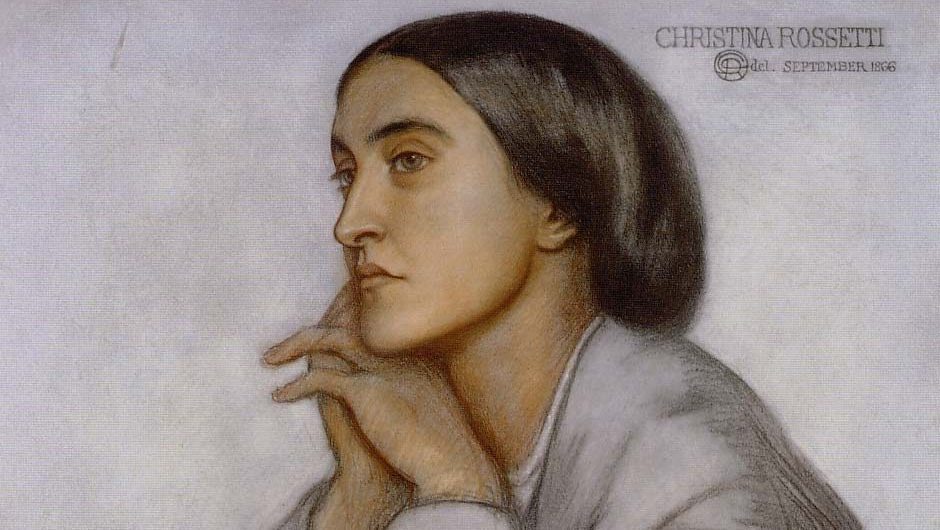
On This Page: Early Life and Education · Literary Career and Major Works · Style and Themes · Later Life and Legacy · Notable Poems · Frequently Asked Questions · Related Poets
Early Life and Education
Rossetti was born in London on December 5, 1830, into a gifted Anglo-Italian family steeped in art and literature; her brother Dante Gabriel Rossetti would help found the Pre-Raphaelite Brotherhood, and the household buzzed with painters, poets, and political exiles.
Educated at home, largely by her mother, she began writing verse as a child. The defining influence of her life was her devout Anglo-Catholic faith, which shaped not only her devotional poetry but the renunciations of her personal life.
Literary Career and Major Works
Rossetti’s reputation was made by a single extraordinary book. After years of writing privately and for periodicals, she published Goblin Market and Other Poems in 1862 to immediate acclaim. Its title poem — a sensuous, unsettling allegory of temptation and sisterly love — remains her most famous work and one of the strangest poems of the century. She followed it with The Prince’s Progress and Other Poems (1866) and A Pageant and Other Poems (1881), confirming her command of both lyric and devotional verse.
Alongside her major poetry, she wrote children’s rhymes (Sing-Song, 1872) and devotional prose, and gave the world the enduring Christmas poem “In the Bleak Midwinter.”
Style and Themes
Rossetti’s art lies in the tension between restraint and intensity. Her verse is musical, precise, and deceptively simple, its plain surfaces carrying great emotional and symbolic weight.
Her recurring subjects — renunciation, redemption, mortality, and divine love — grow directly out of her faith, and many of her finest poems turn on the choice to give something up. Death is a constant presence, approached with calm and even longing.
Though often read as gentle and self-effacing, her work carries a quiet strength and a subtle insistence on the spiritual autonomy of women.
Later Life and Legacy
Rossetti’s later years were quiet, devout, and shadowed by illness. She turned down at least two marriage proposals over differences of religious faith and lived much of her life within her close-knit family, growing increasingly withdrawn and increasingly devotional. Graves’ disease and, finally, cancer marked her last years, yet she went on writing almost to the end, dying in London on December 29, 1894.
Once somewhat overshadowed, she is now firmly established among the great lyric poets in English — admired for a spiritual seriousness and emotional honesty that influenced Gerard Manley Hopkins and reaches readers still.
Notable Poems
These are the Rossetti poems most worth starting with:
- Goblin Market: Her masterpiece — a richly sensuous, allegorical tale of two sisters, forbidden fruit, temptation, and redemption.
- Remember: A tender sonnet asking a loved one to remember her after death — but to choose happiness over grief.
- In the Bleak Midwinter: A spare, beloved Christmas poem, later set to music as one of the best-known English carols.
- A Birthday: A radiant love lyric overflowing with images of joy — “My heart is like a singing bird.”
- Up-Hill: A quiet allegorical dialogue casting life as a long uphill road that ends in rest.
- Song (When I am dead, my dearest): A gentle meditation on death that releases the living from mourning.
Frequently Asked Questions
Quick answers to the questions readers most often ask about Christina Rossetti.
What is Christina Rossetti best known for?
Her narrative poem “Goblin Market,” her sonnet “Remember,” and the Christmas poem “In the Bleak Midwinter,” later set to music as a famous carol. She is regarded as one of the great Victorian lyric poets.
What is Goblin Market about?
A long, vivid allegory in which one sister is nearly destroyed by eating the fruit sold by goblin men, and the other saves her through love and self-sacrifice. It has been read as a tale about temptation, sisterhood, faith, and female desire.
Was Christina Rossetti related to Dante Gabriel Rossetti?
Yes. The painter-poet Dante Gabriel Rossetti, a founder of the Pre-Raphaelite Brotherhood, was her older brother; the whole family was artistic and Anglo-Italian.
What are the main themes in Christina Rossetti’s poetry?
Religious faith and devotion, renunciation, love, and mortality — often with a quiet undercurrent of women’s spiritual independence.
Did Christina Rossetti ever marry?
No. She turned down at least two proposals over differences of religious belief and remained unmarried, devoted to her faith and family.
Related Poets
Readers who admire Rossetti often turn to these poets:
- Elizabeth Barrett Browning: The other major woman poet of the Victorian age, whose passionate verse Rossetti admired.
- Dante Gabriel Rossetti: Her brother, and a founder of the Pre-Raphaelite Brotherhood — a poet and painter both.
- Gerard Manley Hopkins: A devout Victorian whose intense religious verse shares Rossetti’s spiritual seriousness.
- Emily Dickinson: An American contemporary whose spare, death-haunted lyrics echo Rossetti’s compression and intensity.
- Alfred Tennyson: The age’s leading poet, whose musical mastery makes a useful counterpoint to Rossetti’s quieter art.