QUICK FACTS
Born: March 6, 1806 · Durham, England
Died: June 29, 1861 · Florence, Italy (aged 55)
Era: Victorian
Occupation: Poet
Education: Educated at home
Known for: Sonnets from the Portuguese (“How do I love thee?”); Aurora Leigh
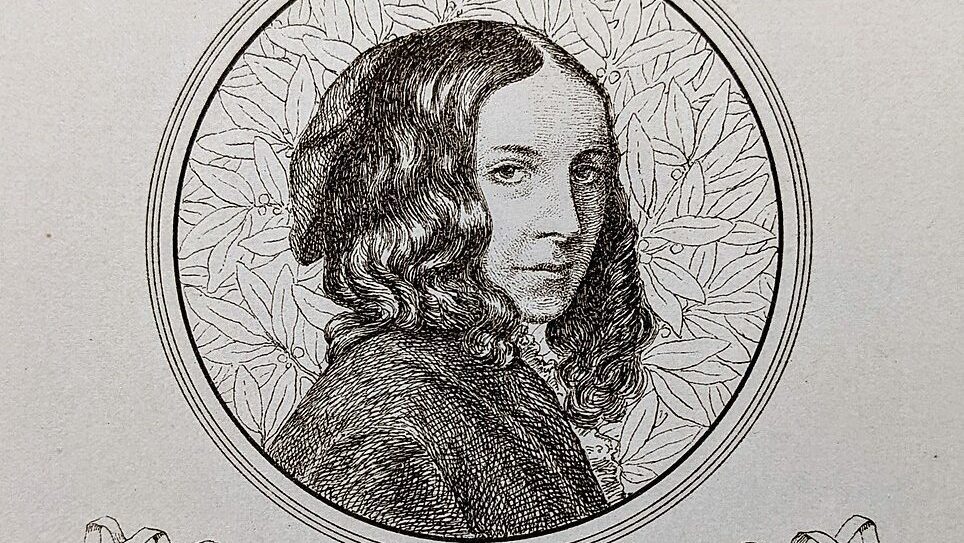
Elizabeth Barrett Browning (1806–1861) was one of the most admired and widely read poets of the Victorian age — a writer of deep feeling, fierce moral conviction, and formidable learning. She is loved above all for her love sonnets, but her range stretched from intimate devotion to blazing protest against slavery, child labor, and the constraints placed on women.
Her sonnet beginning “How do I love thee? Let me count the ways” is among the most famous love poems in English. Yet her boldest achievement may be Aurora Leigh, a book-length verse-novel that put a woman writer’s life and ambitions at the center of serious poetry.
On This Page: Early Life and Education · Literary Career and Major Works · Style and Themes · Later Life and Legacy · Notable Poems · Frequently Asked Questions · Related Poets
Early Life and Education
Elizabeth Barrett was born on March 6, 1806, into a wealthy family whose fortune came from Jamaican plantations — a fact that would later trouble her conscience. A brilliant, bookish child, she wrote an epic poem at twelve and taught herself Greek, Latin, and philosophy. In her teens a spinal injury and chronic illness left her frail, and she spent much of her youth as a semi-invalid, reading and writing in seclusion under the roof of a loving but controlling father who forbade any of his children to marry. From that confinement she built an extraordinary inner life and a formidable body of learning.
Literary Career and Major Works
Barrett Browning was a celebrated poet well before her famous marriage. The Seraphim and Other Poems (1838) made her name, and by the 1840s she was one of the most respected poets in England — admired enough to be mentioned as a possible Poet Laureate. She used her growing fame for conscience as much as art: “The Cry of the Children” (1843) is a searing protest against child labor. In 1845 the younger poet Robert Browning wrote to her in admiration; their secret courtship led to a clandestine marriage in 1846 and an elopement to Italy, against her father’s wishes. In Italy her health and spirits revived, and there she wrote Sonnets from the Portuguese (1850), the love sequence that contains “How do I love thee?”, and the ambitious verse-novel Aurora Leigh (1856).
Style and Themes
Barrett Browning fused passionate feeling with moral and intellectual force. Her verse joins Romantic intensity to a distinctly Victorian social conscience, moving between private devotion and public protest. Love — human and divine — is her great subject, but so are political liberty, the abuses of industrial society, and the rights and inner lives of women. She wrote with classical learning and emotional candor in equal measure, and in Aurora Leigh she insisted that a woman’s experience was fit matter for the highest poetic ambition. That blend of tenderness and daring shaped later women poets, among them Emily Dickinson and Christina Rossetti.
Later Life and Legacy
Italy became Barrett Browning’s home and her cause. Settled in Florence with Robert and their son, she threw herself into the cause of Italian unification, the Risorgimento, which inspired her political volume Poems Before Congress (1860). Her health, never robust, declined, and she died in Florence on June 29, 1861, in her husband’s arms. She was mourned in both England and Italy, and her grave in the city’s English Cemetery is still a place of pilgrimage. She left a legacy as a poet who united intellect, feeling, and moral vision — and who helped enlarge what a woman’s voice could do in English poetry.
Notable Poems
These are the Barrett Browning poems most worth starting with:
- Sonnets from the Portuguese: Her famous sequence of love sonnets to Robert Browning, which includes the beloved “How do I love thee? Let me count the ways.”
- How Do I Love Thee? (Sonnet 43): The single most famous of the Portuguese sonnets — a soaring, endlessly quoted declaration of complete love.
- Aurora Leigh: A book-length verse-novel following a woman’s struggle to become a poet — autobiographical, feminist, and far ahead of its time.
- The Cry of the Children: A powerful protest poem against the exploitation of children in the mines and factories of industrial England.
- A Musical Instrument: A late lyric retelling the myth of Pan and the reed, on the cost and the making of art.
- The Best Thing in the World: A short, graceful lyric weighing what is truly most worth having in life.
Frequently Asked Questions
Quick answers to the questions readers most often ask about Elizabeth Barrett Browning.
What is Elizabeth Barrett Browning best known for?
Her love sonnet “How do I love thee? Let me count the ways,” from Sonnets from the Portuguese, and her ambitious verse-novel Aurora Leigh. She was one of the most celebrated poets of the Victorian age.
What is “How do I love thee?” about?
It is Sonnet 43 of Sonnets from the Portuguese, in which the speaker tries to measure the full reach of her love — by the breadth, depth, and height her soul can reach — written for Robert Browning. It is one of the most famous love poems in English.
Why is it called “Sonnets from the Portuguese”?
The title was a discreet disguise. These were intensely personal poems to Robert Browning, and the “Portuguese” framing — drawn from his pet name for her, “my little Portuguese” — let them be presented as though translated rather than confessional.
Was Elizabeth Barrett Browning married to Robert Browning?
Yes. The two poets fell in love through their letters, married secretly in 1846 against her father’s wishes, and moved to Italy, where they lived until her death in 1861.
What are the main themes in her poetry?
Love, both human and divine; religious faith; and social justice — including powerful protests against slavery, child labor, and the restriction of women.
Related Poets
Readers who admire Barrett Browning often turn to these poets:
- Robert Browning: Her husband and fellow poet — master of the dramatic monologue, and the “you” of her love sonnets.
- Christina Rossetti: A younger Victorian woman poet whose devotional lyricism she helped make possible.
- Emily Dickinson: An American poet who revered her and kept her portrait on the wall.
- Alfred Tennyson: The age’s leading poet and her contemporary, with whom she was ranked in her lifetime.
- Emily Brontë: A near-contemporary whose fierce, independent verse shares her moral and emotional intensity.