William Carlos Williams (1883–1963) was an American poet best known for “The Red Wheelbarrow,” the 16-word poem of 1923 that became one of the most famous short poems in American literature. He was born and died in Rutherford, New Jersey, and worked there for more than 40 years as a family doctor, writing between appointments. His other major works include “This Is Just to Say,” the five-book epic Paterson, and Pictures from Brueghel, which won the Pulitzer Prize for Poetry in 1963.
Our view is that Williams wrote poetry the way he practiced medicine: by paying close attention to what was in front of him. Where T. S. Eliot looked to Europe and the past, Williams looked at New Jersey and listened to the way Americans actually talked. His short lines ask readers to slow down and see ordinary things clearly, and that plain, local attention changed American poetry.
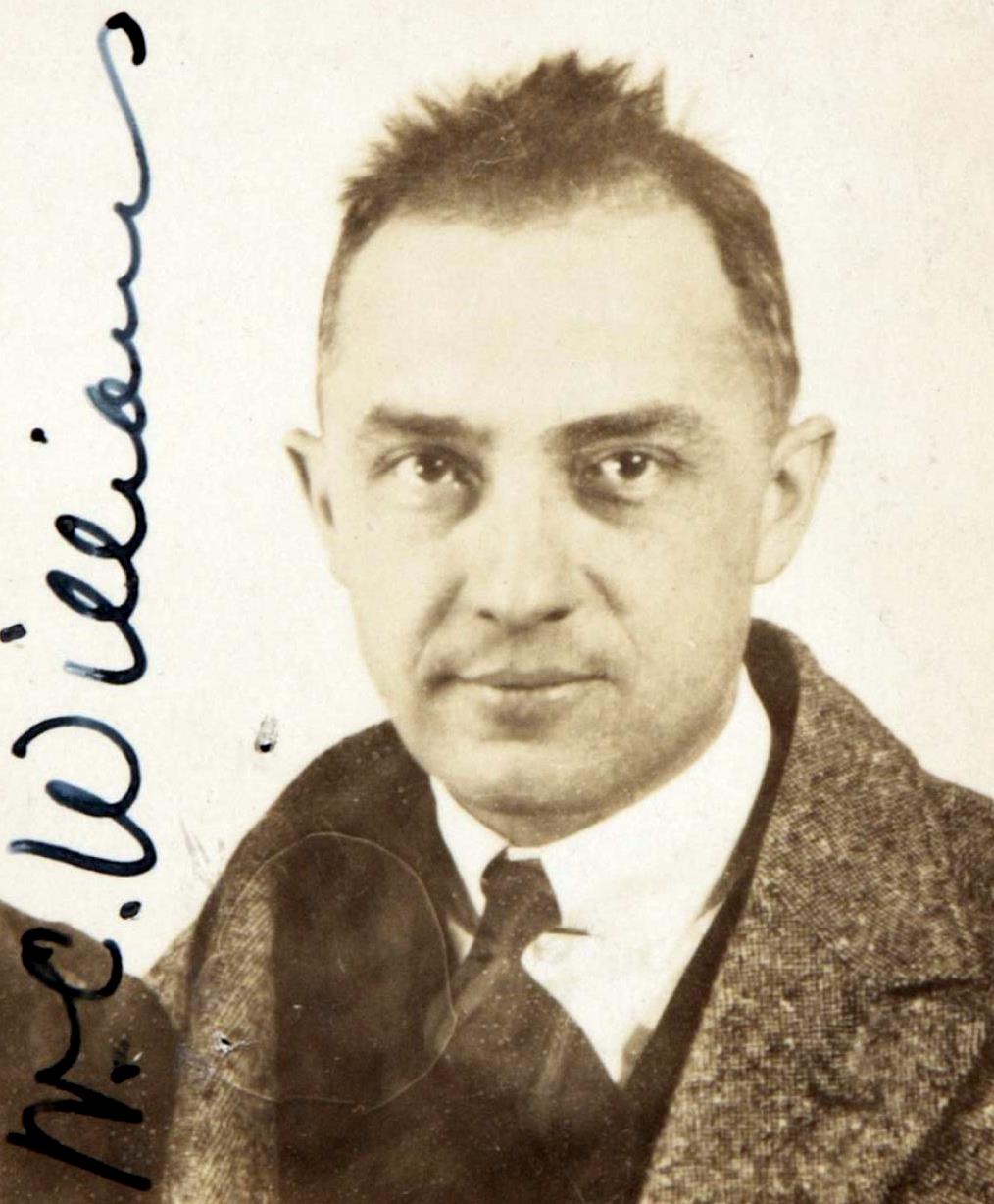
At a Glance
- Born
- September 17, 1883, Rutherford, New Jersey
- Died
- March 4, 1963, Rutherford, New Jersey (age 79)
- Era
- Modernist
- Known for
- “The Red Wheelbarrow,” “This Is Just to Say,” Spring and All, Paterson
- Education
- Horace Mann School, New York; University of Pennsylvania (MD 1906)
- Occupation
- Poet, physician, and pediatrician
- Spouses
- Florence Herman (married 1912)
- Honors
- National Book Award for Poetry (1950); Bollingen Prize (1953); Pulitzer Prize for Poetry (1963, posthumous)
- Buried
- Hillside Cemetery, Lyndhurst, New Jersey
ON THIS PAGE
Why He Matters · Timeline · Life and Career · Poetry and Style · Famous Poems and Books · Legacy · FAQ
Related Poets
Why William Carlos Williams Matters
Williams showed that an American poem could be made from American things in American speech. He dropped regular meter and rhyme, cut his lines short, and wrote about wheelbarrows, plums in an icebox, a red fire truck, and the weeds by a hospital road. His motto, “no ideas but in things,” asked poets to start from what they could see and touch rather than from abstractions or borrowed literary language.
For much of his life, that approach was overshadowed by T. S. Eliot’s learned, allusive style, which Williams thought set American poetry back by 20 years. He outlasted it. By the 1950s, younger poets were turning to him as a model, and Allen Ginsberg, Denise Levertov, Robert Creeley, and Frank O’Hara all learned from him. Much of the plain-spoken, free-verse American poetry written since owes something to the doctor from Rutherford.
William Carlos Williams Timeline
These are the key dates in Williams’s life and work.
- 1883
- William Carlos Williams is born on September 17 in Rutherford, New Jersey, to an English-born father raised in the Dominican Republic and a mother from Mayagüez, Puerto Rico.
- 1897
- He is sent to school for two years near Geneva, Switzerland, and at the Lycée Condorcet in Paris.
- 1902
- After finishing at the Horace Mann School in New York, he enters the medical school of the University of Pennsylvania, where he meets Ezra Pound and H.D.
- 1906
- He graduates with a medical degree and begins internships at hospitals in New York City.
- 1909
- His first book, Poems, is privately printed, and he goes to Leipzig to study pediatrics.
- 1912
- He marries Florence Herman, known as Flossie.
- 1913
- The Tempers is published in London with Pound’s help, and the couple settles at 9 Ridge Road in Rutherford.
- 1917
- Al Que Quiere! is published.
- 1920
- He publishes Kora in Hell: Improvisations and starts the magazine Contact with Robert McAlmon.
- 1921
- Sour Grapes is published, including “The Great Figure.”
- 1923
- Spring and All appears, with the poems later titled “The Red Wheelbarrow” and “To Elsie.”
- 1924
- He becomes chief of pediatrics at Passaic General Hospital, a post he holds for the rest of his life.
- 1925
- In the American Grain, his prose book on American history, is published.
- 1928
- Charles Demuth paints I Saw the Figure 5 in Gold in homage to “The Great Figure.”
- 1934
- Collected Poems 1921–1931 is published, including “This Is Just to Say.”
- 1946
- Paterson: Book I is published.
- 1948
- He suffers a heart attack, followed by a series of strokes from 1949 onward.
- 1950
- He wins the first National Book Award for Poetry, for Paterson: Book III and Selected Poems.
- 1951
- The Autobiography of William Carlos Williams is published.
- 1952
- He is named Consultant in Poetry to the Library of Congress but is kept from serving by unfounded accusations of communist ties.
- 1953
- He shares the Bollingen Prize with Archibald MacLeish.
- 1956
- He writes the introduction to Allen Ginsberg’s Howl and Other Poems.
- 1962
- Pictures from Brueghel and Other Poems is published.
- 1963
- He dies at home in Rutherford on March 4 and is awarded the Pulitzer Prize for Poetry in May.
- 1973
- His house at 9 Ridge Road is added to the National Register of Historic Places.
Life and Career
Williams lived almost his entire life in one small New Jersey town, and he made that narrow world the subject of a large body of work: poems, stories, novels, plays, essays, and an autobiography.
A Bilingual Childhood in Rutherford (1883–1902)
Williams grew up in Rutherford, a suburb across the Meadowlands from New York City. His father, William George Williams, was born in England and raised in the Dominican Republic, and his mother, Raquel Hélène Hoheb, came from Puerto Rico and had trained as a painter in Paris. Spanish was the main language at home. After two years at schools in Switzerland and Paris, he finished his schooling at the Horace Mann School in New York, reading Keats and Whitman and writing his first poems.
Medicine, Pound, and the First Books (1902–1913)
In 1902, Williams entered the medical school of the University of Pennsylvania, where he met Ezra Pound and the poet H.D., who became lifelong friends and sparring partners. He graduated in 1906, interned in New York hospitals, and studied pediatrics in Leipzig. His first book, Poems (1909), was imitative and conventional. He set up practice in Rutherford, married Florence Herman in 1912, and moved into the house at 9 Ridge Road where the couple raised two sons.
The Doctor-Poet and the Avant-Garde (1913–1923)
Through Pound, Williams briefly joined the Imagist movement, and in New York he fell in with the Others group of poets and painters, including Wallace Stevens, Marianne Moore, Marcel Duchamp, Charles Demuth, and Charles Sheeler. His poems grew sharper and more experimental in Al Que Quiere! (1917) and Sour Grapes (1921), and Kora in Hell (1920) puzzled even his friends. With Robert McAlmon, he started the magazine Contact in 1920 to champion art rooted in local American experience. The high point of this period was Spring and All (1923), a mix of prose manifesto and numbered poems that included “The Red Wheelbarrow.”
In Eliot’s Shadow (1923–1945)
Spring and All appeared a year after The Waste Land, and Eliot’s success eclipsed it. Williams later wrote that The Waste Land “set me back twenty years.” He kept working anyway, seeing patients by day and writing at night, and turned to prose as well as poetry: the history In the American Grain (1925), short stories drawn from his practice, and the novel White Mule (1937). From 1924, he was chief of pediatrics at Passaic General Hospital. During the Depression, he wrote for left-wing magazines and supported anti-fascist causes.
Paterson and Late Recognition (1946–1963)
In 1946, Williams published the first book of Paterson, a long poem that treats the industrial city of Paterson, New Jersey, as a man and a myth, mixing verse with letters, news items, and history. It brought him the first National Book Award for Poetry in 1950. A heart attack in 1948 and a series of strokes ended his medical practice, and in 1952 he lost the post of Consultant in Poetry at the Library of Congress over false accusations of communist sympathies. His late poems, written in a relaxed three-step line, include the love poem “Asphodel, That Greeny Flower.” He died at home in 1963, two months before Pictures from Brueghel won the Pulitzer Prize.
Poetry and Style
Williams’s poems are short-lined, unrhymed, and built from plain speech. He wanted the rhythms of American English, not the iambic beat of English poetry, and he talked about a “variable foot” to describe lines measured by breath and emphasis rather than syllables. He broke lines in unexpected places, often splitting a phrase or even a compound word, so the reader sees each part before the whole. In his later work, he developed a “triadic line” that steps down the page in three parts.
His subjects are the local and the ordinary: patients, working people, weeds, trees, city streets, a fire truck, a note on the kitchen table. Painting shaped his eye, and many poems work like small still lifes. His weaknesses are the other side of his strengths. Some poems are so slight that they seem like notes rather than finished work, and Paterson, for all its ambition, can be loose and hard to follow. His portraits of people, especially women and the poor, can also be blunt in ways many readers now find uncomfortable.
Famous Poems and Books
These are the works most readers meet first.
- Al Que Quiere! (1917): His first mature book, with “Tract” and “Danse Russe.”
- Kora in Hell: Improvisations (1920): Experimental prose poems that confused his friends and pointed to his later work.
- The Great Figure (1921): A short poem about a fire truck in the rain that inspired Charles Demuth’s painting I Saw the Figure 5 in Gold.
- Spring and All (1923): A hybrid of prose and 27 poems, including “By the road to the contagious hospital” and “To Elsie.”
- The Red Wheelbarrow (1923): Sixteen words about a wheelbarrow and white chickens, and his most anthologized poem.
- In the American Grain (1925): Prose portraits of figures from American history, from Columbus to Lincoln.
- This Is Just to Say (1934): A note apologizing for eating the plums in the icebox, and one of the most parodied poems in English.
- Paterson (1946–1958): A five-book epic about Paterson, New Jersey, and the poet’s place in American life.
- Pictures from Brueghel and Other Poems (1962): Late poems on paintings by Pieter Bruegel, which won the Pulitzer Prize.
Reputation and Legacy
During his lifetime, Williams was respected by other poets but read by few. Critics preferred the difficulty of Eliot and the elegance of Wallace Stevens, and his own books sold poorly. Recognition came late, with the National Book Award in 1950, the Bollingen Prize, and the posthumous Pulitzer Prize. By then, he had become the model for a new generation. The Beats, the Black Mountain poets, the New York School, and the Objectivists all learned from his line and his attention to the local, and critics such as Randall Jarrell praised him as one of the great American observers.
Today, “The Red Wheelbarrow” and “This Is Just to Say” are among the most taught poems in American schools, and “This Is Just to Say” has inspired countless parodies. The Poetry Society of America gives an annual William Carlos Williams Award, his house in Rutherford is on the National Register of Historic Places, and he was inducted into the New Jersey Hall of Fame in 2009. At St. Mary’s General Hospital in Passaic, where he worked, a plaque reads “We walk the wards that Williams walked.”
Frequently Asked Questions
These are the questions people most often ask about William Carlos Williams.
Who was William Carlos Williams?
William Carlos Williams (1883–1963) was an American poet and doctor, and one of the founders of modern American poetry. He spent his whole working life as a family physician and pediatrician in Rutherford, New Jersey, and wrote “The Red Wheelbarrow,” “This Is Just to Say,” and the long poem Paterson.
Was William Carlos Williams a doctor?
Yes. He earned his medical degree from the University of Pennsylvania in 1906 and practiced as a family doctor and pediatrician in Rutherford, New Jersey, for more than 40 years. From 1924 until his death, he was chief of pediatrics at Passaic General Hospital.
What are William Carlos Williams’s most famous poems?
His most famous poems are “The Red Wheelbarrow” (1923) and “This Is Just to Say” (1934), two short poems about everyday things. His most ambitious work is Paterson (1946–1958), a five-book epic about the city of Paterson, New Jersey.
What inspired William Carlos Williams to write poetry?
He began writing poems as a young man under the spell of John Keats and Walt Whitman, and his friendship with Ezra Pound at medical school pushed him toward modern verse. Later, his inspiration came mostly from ordinary life in New Jersey: his patients, their speech, and the streets, yards, and rivers around him.
How did William Carlos Williams die?
He died of a stroke at his home in Rutherford, New Jersey, on March 4, 1963, at the age of 79. He had suffered a heart attack in 1948 and a series of strokes after 1949, which slowly ended his medical practice but not his writing.
Related Poets
These poets shaped Williams or shared his world.
- Ezra Pound: His friend from medical school, who helped publish his early work and drew him into Imagism.
- Walt Whitman: An early model whose free verse and love of ordinary American life Williams carried into the 20th century.
- T. S. Eliot: His great rival, whose learned, European style Williams spent his career arguing against.
- Carl Sandburg: Another modernist who wrote about American cities and working people in plain free verse.
- John Keats: The poet Williams imitated as a young man before finding his own voice.