QUICK FACTS
Born: January 6, 1878 — Galesburg, Illinois, USA
Died: July 22, 1967 (aged 89) — Flat Rock, North Carolina
Era: Modernist
Occupation: Poet, biographer, journalist, folk musician
Education: Lombard College (non-graduate)
Known for: Free-verse poetry of working-class America; three Pulitzer Prizes
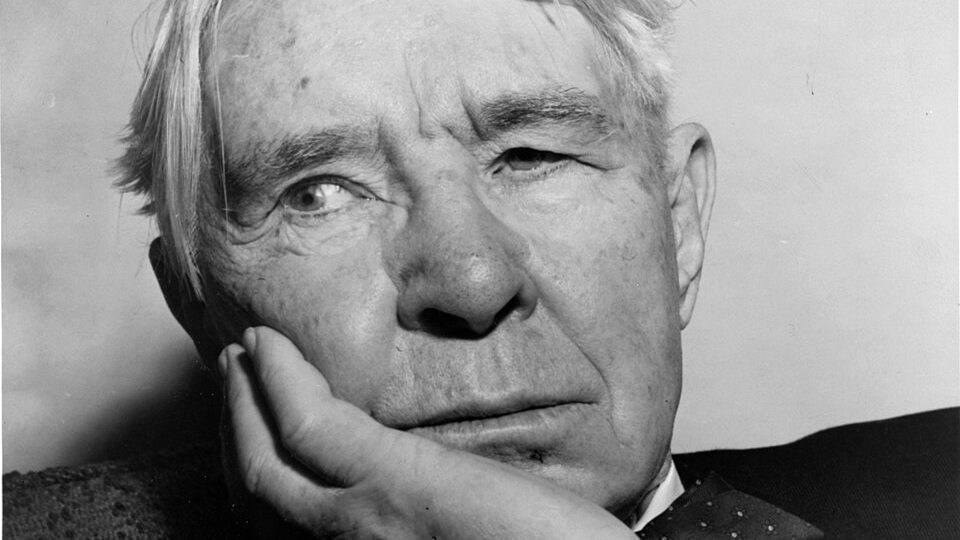
Carl Sandburg (1878–1967) was one of America’s most beloved poets — a Pulitzer Prize–winning writer who gave voice to ordinary working people and to the landscape, labor, and restless energy of a nation in transition. Across poetry, biography, and folk song, he built a body of work rooted in realism, democratic idealism, and an abiding faith in the common spirit.
His voice was at once lyrical and rough-hewn, carrying the cadence of American speech from the farms and factories of the nineteenth century into the cities and conflicts of the twentieth. More than almost any contemporary, he made plainspoken free verse a vehicle for celebrating the people he believed were the true foundation of the country.
ON THIS PAGE
Early Life and Education · Literary Career and Major Works · Style, Themes, and Influence · Later Life and Legacy · Notable Poems · Frequently Asked Questions · Related Poets
Early Life and Education
Sandburg was born in Galesburg, Illinois, the son of Swedish immigrants who instilled in him a strong work ethic and a respect for common labor. His father worked on the railroads, and young Carl left school at thirteen to help support the family through a series of odd jobs — milkman, bricklayer, and barbershop porter among them. These years gave him firsthand insight into the struggles of working-class Americans, a theme that would come to define his poetry.
He briefly attended Lombard College, where he came under the mentorship of Philip Green Wright, a professor who recognized his talent and printed his earliest poems. Though Sandburg never completed his degree, his time at Lombard widened his intellectual and political horizons, drawing him toward social justice, democracy, and the labor movement — ideals that would shape both his writing and his public life.
Literary Career and Major Works
After serving in the Spanish–American War, Sandburg worked as a journalist in Chicago, the city that became the heart of his creative identity. His first major collection, Chicago Poems (1916), established him as a powerful new voice in American poetry. Its raw free-verse style and its celebration of the city’s energy and grit marked a sharp break from traditional convention — the famous opening, “Hog Butcher for the World, / Tool Maker, Stacker of Wheat,” announced a poet who would speak for the people rather than above them.
He followed that success with Cornhuskers (1918), which earned a Pulitzer Prize and deepened his reputation as a poet of the American heartland. Later collections — Smoke and Steel (1920), Good Morning, America (1928), and The People, Yes (1936) — widened his scope to take in industrialization, economic hardship, and democratic hope, all carried by the plainspoken language and musical cadence he drew from American folk tradition.
Sandburg was also a major biographer. His monumental study of Abraham Lincoln — The Prairie Years (1926) and The War Years (1939) — established him as one of the foremost interpreters of Lincoln’s life and earned him a Pulitzer Prize in history.
Style, Themes, and Influence
Sandburg’s style is marked by free verse, colloquial diction, and a musical sense of rhythm drawn from both speech and song. His poems often read like ballads or chants, echoing the democratic spirit of Walt Whitman while speaking in a voice unmistakably his own. He celebrated the resilience and dignity of ordinary people — workers, farmers, soldiers, and dreamers — whom he saw as the true foundation of America.
His themes range across labor, love, nature, faith, and the promise of democracy. Though often hopeful, his poetry never looks away from hardship; he sought to reconcile the brutal realities of industrial life with an enduring belief in human progress and compassion. His language, at once simple and profound, opened poetry to audiences far beyond the academy.
That influence reached past literature. Sandburg’s fusion of poetry and folk music anticipated the American singer-songwriter tradition later embodied by figures such as Woody Guthrie and Bob Dylan, and his democratic ethos resonated with generations of socially engaged poets.
Later Life and Legacy
In his later years Sandburg became a cultural icon — a poet of the people who transcended literary boundaries, writing and lecturing widely to national acclaim. His final poetry collection, Honey and Salt (1963), reflects the wisdom and tenderness of age, blending meditations on love, time, and mortality.
He received numerous honors, including the Presidential Medal of Freedom in 1964, and spent his final years at his home in Flat Rock, North Carolina, where he remained active in both poetry and music. He died in 1967, leaving a legacy rooted in empathy, authenticity, and the conviction that poetry belongs to everyone.
Notable Poems
A handful of Sandburg’s poems have become fixtures of the American canon, ranging from sprawling civic hymns to miniatures of just a few lines.
- Chicago: The brawling free-verse hymn to the industrial city that made his name.
- Fog: A six-line imagist miniature in which the fog arrives on little cat feet.
- Grass: A short, haunting anti-war poem spoken in the voice of the grass that covers the battlefield dead.
- Cool Tombs: A meditation that measures the famous dead against the quiet forgetfulness of the grave.
Frequently Asked Questions
Common questions about Carl Sandburg’s life, work, and reputation.
What Is Carl Sandburg Best Known For?
He is best known for his free-verse poetry celebrating working-class America — above all the poem “Chicago” and the collection Chicago Poems (1916) — and for his Pulitzer Prize–winning biography of Abraham Lincoln.
How Many Pulitzer Prizes Did Carl Sandburg Win?
Three: two for poetry — Cornhuskers (1919) and Complete Poems (1951) — and one in history for Abraham Lincoln: The War Years (1940).
Why Is Carl Sandburg Compared to Walt Whitman?
Like Whitman, Sandburg wrote in long-lined free verse, built poems from catalogues of American life, and celebrated ordinary working people in a frankly democratic spirit.
When and Where Was Carl Sandburg Born?
He was born on January 6, 1878, in Galesburg, Illinois, to Swedish immigrant parents, and died on July 22, 1967, in Flat Rock, North Carolina.
Related Poets
Readers drawn to Sandburg’s plainspoken, democratic verse often explore these poets as well.
- Walt Whitman: The free-verse forefather whose democratic catalogues Sandburg openly echoed.
- Langston Hughes: A fellow poet of working people who carried plainspoken free verse into the Harlem Renaissance.
- Vachel Lindsay: A midwestern contemporary who, like Sandburg, built verse from American song and chant.
- Edgar Lee Masters: An Illinois poet of the same era who gave voice to ordinary lives in Spoon River Anthology.