QUICK FACTS
Born: 30 November 1872, Guelph, Ontario, Canada
Died: 28 January 1918 (aged 45), Boulogne, France
Era: Victorian
Occupation: Poet, physician, and soldier
Education: University of Toronto (Medicine)
Known for: “In Flanders Fields,” the most famous poem of the First World War
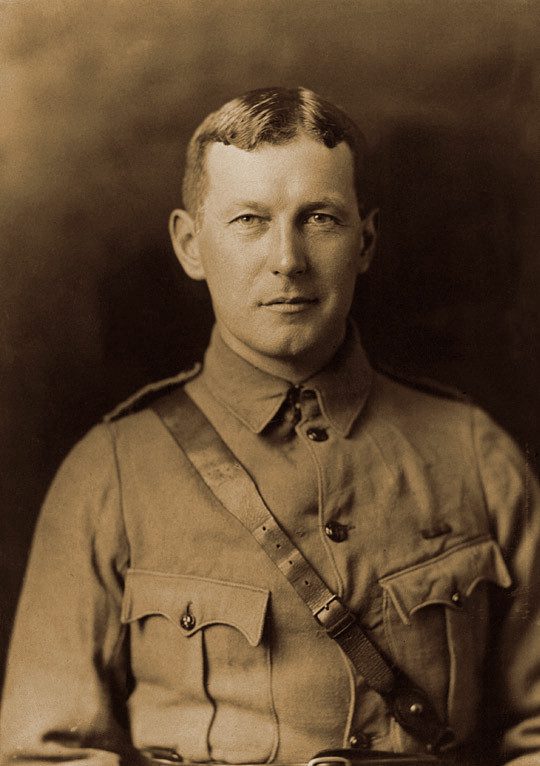
John McCrae wrote fifteen lines that the English-speaking world now recites every November. “In Flanders Fields” is among the most quoted poems ever written, printed on memorials and money, read aloud at ceremonies from Ottawa to London, and — more than any single text — responsible for the red poppy that hundreds of millions of people pin to their coats each autumn. It is a strange monument for a man who never thought of himself as a poet first.
McCrae was a doctor. He spent his life as a physician and pathologist, served as a soldier in two wars, and wrote verse on the side, the way a busy professional keeps up a private habit. He composed his famous poem in a few minutes beside a fresh grave on the Ypres salient, almost threw it away, and was dead of pneumonia within three years — before the poppy he had unknowingly launched became a global symbol. The poem conquered the century. Its author barely saw the beginning of it.
ON THIS PAGE
Early Life and Medicine · Soldier and Surgeon · In Flanders Fields · The Poppy and Remembrance · Final Years and Legacy
Notable Poems · Frequently Asked Questions · Related Poets
Early Life and Medicine
John McCrae was born on 30 November 1872 in Guelph, Ontario, into a family of Scottish descent with a strong streak of soldiering and faith. His father was a militia officer, and the household prized duty, religion, and education in roughly equal measure — values that ran straight through McCrae’s life and into his verse. He was a bright, dutiful boy who wrote poems from an early age and won a scholarship to the University of Toronto.
He took his degree in medicine and proved exceptional at it. McCrae trained as a pathologist, studied and taught at Johns Hopkins and McGill, co-authored a standard textbook on pathology, and built a respected practice in Montreal as a physician at the Royal Victoria and Montreal General hospitals. By his early forties he was an established medical man with a sideline in published poetry — the writing always secondary to the doctoring.
Soldier and Surgeon
McCrae’s other vocation was the army. He had soldiered since boyhood in the militia, and twice in his life he set aside his medical practice to go to war — first as a gunner in South Africa, and then, fatally, as a military surgeon on the Western Front.
An Artilleryman in South Africa
When the Second Boer War broke out, McCrae volunteered and served in South Africa as an artillery officer, commanding a battery rather than a hospital. The experience left him with a soldier’s instincts and a lasting attachment to the guns, and it shaped how he saw the larger war to come. He returned to Canada and his medical career, but the military pull never left him.
Brigade Surgeon at Ypres
At the outbreak of the First World War in 1914, McCrae — by then in his forties — enlisted again, this time as a brigade surgeon with the Canadian artillery, holding the rank of major and later lieutenant-colonel. In the spring of 1915 his unit was thrown into the Second Battle of Ypres, where the Germans used poison gas on a mass scale for the first time. For more than two weeks McCrae worked a dressing station dug into the bank of the Yser canal, treating a ceaseless flow of wounded under bombardment. It was the worst stretch of his life, and it produced his poem.
“In Flanders Fields”
The poem has an origin story that has been told so often it risks sounding like legend, but its core is well documented. It was written in the field, in grief, and very fast.
The Death of Alexis Helmer
On 2 May 1915 a young officer named Alexis Helmer, a friend of McCrae’s, was killed by a shell at Ypres. With no chaplain available, McCrae conducted the burial himself, and the next day, sitting in the back of an ambulance near the makeshift cemetery, he looked out at the wild poppies already springing up among the crosses and the churned earth. What he wrote was a rondeau — a tight, repeating French form — that gives the dead a voice, asks the living to take up the quarrel, and warns that the fallen will not rest if the promise is broken. By the usual account, McCrae was dissatisfied with the result and tossed the page aside; a fellow officer retrieved it.
A Rondeau That Conquered the World
The poem was published anonymously in the British magazine Punch on 8 December 1915, and it detonated. Within months “In Flanders Fields” was everywhere — reprinted endlessly, translated, set to music, and put to hard practical use selling war bonds and recruiting soldiers. Part of its appeal is formal: the rondeau’s circling refrain mimics the way grief returns to the same few words. But its real force lies in the unsettling turn of its final lines, where the comfort of remembrance hardens into an obligation laid on the living by the dead. No other poem of the war reached so many people so quickly, and none has lasted longer in public ritual.
The Poppy and Remembrance
The most consequential thing about “In Flanders Fields” is not literary but symbolic: it made the poppy the flower of remembrance. The image of poppies blowing between the graves caught the imagination of readers everywhere, and after the war an American teacher, Moina Michael, began wearing and selling red poppies in memory of the dead, directly inspired by McCrae’s lines. A French organizer, Anna Guérin, spread the idea further, and within a few years veterans’ organizations across the English-speaking world had adopted the poppy as their emblem.
The result is one of the most widespread acts of public memory in the modern world. Every November, the poppy McCrae described in a handful of lines reappears on millions of lapels, on wreaths, and on memorials, almost always without the wearer knowing the name of the army doctor who set the image loose. The poem did not merely describe remembrance. It manufactured a ritual that has outlived its author by more than a century.
Final Years and Legacy
McCrae did not live to see most of this. After Ypres he was transferred to the large Canadian hospital at Boulogne, where he served as a senior physician through the grinding middle years of the war, increasingly worn down by overwork, asthma, and the strain of what he had seen. In January 1918 he was named consulting physician to the British armies in France — the first Canadian to hold the post — but he never took it up. He fell ill with pneumonia and meningitis and died on 28 January 1918, at the age of forty-five. He was buried with full military honours at Wimereux, near Boulogne, his horse led behind the coffin.
His collected poems appeared the following year as In Flanders Fields and Other Poems, fixing his small body of work in print. Most of it is conventional late-Victorian verse, earnest and well-made rather than groundbreaking — which makes the reach of his one great poem all the more remarkable. McCrae’s birthplace in Guelph is now a museum, his rondeau is taught to schoolchildren across the Commonwealth, and the poppy keeps his image in circulation long after his name has slipped from it. Few poets have written so little and changed public life so much.
Notable Poems
- In Flanders Fields: The rondeau he wrote at Ypres in 1915, the most recited poem of the war and the source of the remembrance poppy.
- The Anxious Dead: A 1917 sequel of sorts, in which the war dead beg the living to fight on and bring them word of victory.
- The Unconquered Dead: A grim dramatic monologue spoken by soldiers who held their ground to the last.
- Slumber Songs: A tender lullaby sequence that shows the gentler register beneath McCrae’s martial verse.
- The Night Cometh: A meditation on work, duty, and approaching death, its title drawn from the Gospel of John.
Frequently Asked Questions
What Is John McCrae Best Known For?
McCrae is best known for “In Flanders Fields,” the short rondeau he wrote during the Second Battle of Ypres in 1915. It became the most widely recited poem of the First World War and the direct inspiration for the red remembrance poppy worn every November across the Commonwealth and beyond.
Why Did John McCrae Write “In Flanders Fields”?
He wrote it in grief. On 2 May 1915, McCrae’s friend Lieutenant Alexis Helmer was killed by a shell at Ypres, and McCrae conducted the burial himself. The next day, looking out at the poppies growing among the graves, he composed the poem in a matter of minutes from the back of an ambulance.
How Did John McCrae Die?
McCrae was not killed in battle. Worn down by years of service at a military hospital in Boulogne, he contracted pneumonia and meningitis and died on 28 January 1918, aged forty-five, about ten months before the war ended. He was buried with military honours at Wimereux in northern France.
Was John McCrae a Doctor?
Yes. Medicine was his real profession. McCrae was a physician and pathologist who trained and taught at Johns Hopkins and McGill, co-wrote a textbook on pathology, and practised in Montreal. He served in the army as a military surgeon, ultimately as a lieutenant-colonel, and wrote poetry on the side.
How Did “In Flanders Fields” Create the Remembrance Poppy?
The poem’s image of poppies blooming among the war graves moved readers around the world. An American teacher, Moina Michael, was so struck by it that she began wearing and selling red poppies for the dead, and a French campaigner, Anna Guérin, carried the idea further. Veterans’ groups soon adopted the poppy, and it became the lasting symbol of wartime remembrance.
Related Poets
- Wilfred Owen: The other great poet of the First World War, whose unflinching realism is the opposite pole to McCrae’s solemn idealism.
- Rupert Brooke: The English poet of patriotic sacrifice whose sensibility McCrae’s most famous poem shares.
- Alan Seeger: The American volunteer poet of “I Have a Rendezvous with Death,” killed in 1916, a close counterpart to McCrae in tone.
- Robert W. Service: McCrae’s fellow Canadian, the hugely popular “Bard of the Yukon,” who also wrote widely read verse of the war.
- Rudyard Kipling: The imperial bard whose grave, dutiful register McCrae’s work echoes, and who lost his own son to the war.