Edna St. Vincent Millay (1892–1950) was an American poet best known for “First Fig,” the four-line poem of 1920 that begins “My candle burns at both ends,” and for her sonnets of love and loss. In 1923 she became the first woman to win the Pulitzer Prize for Poetry, and through the 1920s she was the most famous poet in America, filling lecture halls on her reading tours.
Our view is that Millay’s great subject is the gap between what we feel and what lasts. She writes about love with total frankness, then admits in the same breath that it will fade, and she refuses to be consoled about death. She did it in sonnets and rhymed stanzas when most serious poets had moved on, which is why critics dismissed her and why readers never stopped quoting her.
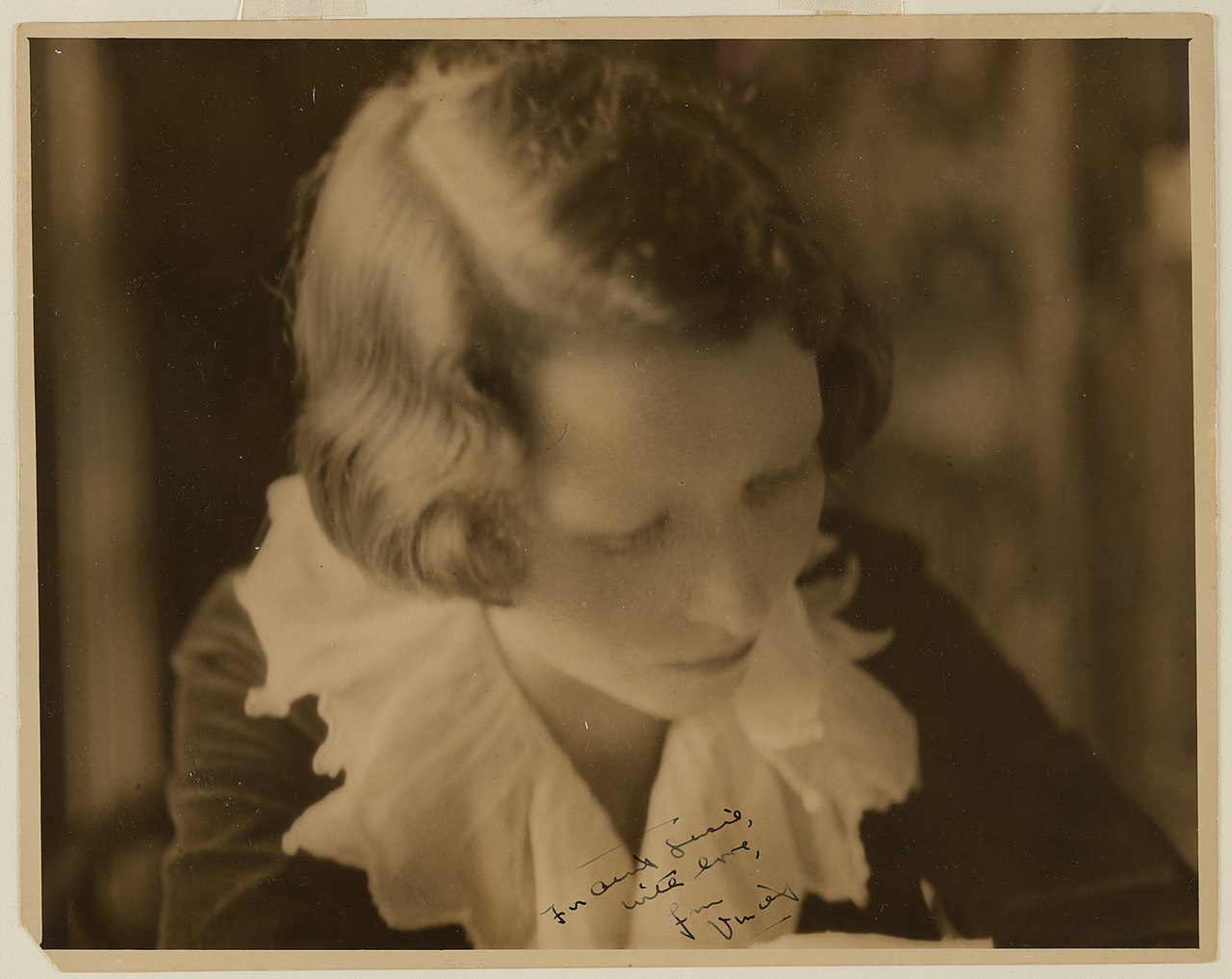
At a Glance
- Born
- February 22, 1892, Rockland, Maine
- Died
- October 19, 1950, Steepletop, Austerlitz, New York (age 58)
- Era
- Modernist era
- Known for
- “First Fig,” “Renascence,” “What Lips My Lips Have Kissed,” The Harp-Weaver and Other Poems, Fatal Interview
- Education
- Vassar College (AB 1917)
- Occupation
- Poet, playwright, and librettist
- Spouses
- Eugen Jan Boissevain (married 1923)
- Honors
- Pulitzer Prize for Poetry (1923); Frost Medal (1943)
- Buried
- Steepletop, Austerlitz, New York
ON THIS PAGE
Why She Matters · Timeline · Life and Career · Poetry and Style · Famous Poems and Books · Legacy · FAQ
Related Poets
Why Edna St. Vincent Millay Matters
Millay proved that the old forms still had life in them. While T. S. Eliot and Ezra Pound were breaking English verse into fragments, she wrote tight Petrarchan and Shakespearean sonnets that sound like a real woman talking, sharp, funny, and unashamed. Richard Wilbur later said she wrote some of the best sonnets of the century, and poems such as “What Lips My Lips Have Kissed” and “Love Is Not All” hold up beside the Elizabethans she learned from.
She also changed who a poet could be. Before Millay, the woman poet in America was expected to be modest and sad. She was openly ambitious, lived as she pleased in Greenwich Village, and wrote about desire and independence without apology. For the young women of the 1920s, “First Fig” was less a poem than a motto, and her example opened the way for the frank, personal poetry of the decades that followed.
Edna St. Vincent Millay Timeline
These are the key dates in Millay’s life and work.
- 1892
- Edna St. Vincent Millay is born in Rockland, Maine, on February 22, the eldest of three sisters.
- 1906
- At 14, she wins the St. Nicholas Gold Badge for poetry.
- 1912
- “Renascence” places fourth in The Lyric Year contest, and the controversy over its losing makes her name.
- 1913
- With the help of the patron Caroline B. Dow, she enters Vassar College.
- 1917
- She graduates from Vassar, publishes Renascence and Other Poems, and moves to Greenwich Village.
- 1919
- Her antiwar verse play Aria da Capo is staged by the Provincetown Players.
- 1920
- A Few Figs from Thistles is published, and “What Lips My Lips Have Kissed” appears in Vanity Fair.
- 1921
- She publishes Second April and sails for Europe as a correspondent for Vanity Fair.
- 1923
- She wins the Pulitzer Prize for Poetry, marries Eugen Jan Boissevain in July, and publishes The Harp-Weaver and Other Poems.
- 1925
- She and Boissevain buy Steepletop, a farm near Austerlitz, New York.
- 1927
- The King’s Henchman, her opera with Deems Taylor, premieres at the Metropolitan Opera, and she is arrested in Boston protesting the execution of Sacco and Vanzetti.
- 1928
- The Buck in the Snow is published, with “Dirge Without Music.”
- 1931
- She publishes Fatal Interview, a sequence of 52 love sonnets.
- 1934
- Wine from These Grapes is published.
- 1936
- She is thrown from a moving car and badly injures her back, leaving her in pain for the rest of her life.
- 1940
- Make Bright the Arrows collects her poems urging America to enter World War II.
- 1941
- Collected Sonnets is published.
- 1942
- The Murder of Lidice, her verse protest against a Nazi massacre, is broadcast and published.
- 1943
- She receives the Frost Medal for her lifetime contribution to American poetry.
- 1949
- Eugen Boissevain dies, after 26 years of marriage.
- 1950
- She dies at Steepletop on October 19, at 58, and is buried on the farm.
- 1954
- Mine the Harvest, a collection of her last poems, is published.
- 1973
- Her sister Norma opens the Millay Colony for the Arts at Steepletop.
- 1981
- The US Postal Service issues a stamp in her honor.
Life and Career
Millay’s life moved from poverty in coastal Maine to fame in New York and then to a long, often painful retreat on a farm in the Berkshire foothills.
Childhood in Maine (1892–1912)
Millay was born in Rockland, Maine, and named for St. Vincent’s Hospital in New York, where an uncle’s life had been saved shortly before her birth. Her mother, Cora, divorced her father when Edna was a child and raised three daughters alone, working as a nurse and moving often before settling in Camden, Maine. Cora filled the house with books and music and encouraged the girls to write. Edna published poems in the children’s magazine St. Nicholas while still in school.
Renascence and Vassar (1912–1917)
In 1912, at 20, Millay entered “Renascence” in a contest for the anthology The Lyric Year. It placed only fourth, and the public outcry over the result made her better known than the winners. That summer she recited the poem at the Whitehall Inn in Camden, where a New York patron, Caroline B. Dow, heard her and offered to pay for college. Millay entered Vassar in 1913, chafed at its rules, wrote plays and poems, and graduated in 1917, the same year her first book appeared.
Greenwich Village and Fame (1917–1923)
In New York, Millay joined the bohemian world of Greenwich Village, acting with the Provincetown Players and writing prose for magazines under the pen name Nancy Boyd. A Few Figs from Thistles (1920) made her a celebrity and a scandal, with its flippant poems about short-lived love. Many men proposed to her, among them the critic Edmund Wilson, and she turned them all down. In 1921 Vanity Fair sent her to Europe, where she spent two years writing and traveling. She came home early in 1923, and that spring she won the Pulitzer Prize for Poetry, the first woman to receive it.
Marriage and Steepletop (1923–1936)
In July 1923, Millay married Eugen Jan Boissevain, a Dutch importer who gave up his business to manage her career and their household. In 1925 they bought Steepletop, a run-down blueberry farm near Austerlitz, New York, where she lived for the rest of her life. She wrote the libretto for The King’s Henchman (1927), one of the most successful American operas of its day, and was arrested that summer protesting the Sacco and Vanzetti executions. Her reading tours drew huge crowds, and the love sonnets of Fatal Interview (1931) sold remarkably well during the Depression.
War, Illness, and the Last Years (1936–1950)
In 1936, Millay was thrown from a car and injured her spine, and she lived in pain for the rest of her life. A pacifist in World War I, she urged America to fight in World War II and wrote propaganda verse for the Writers’ War Board, work that critics judged weak and that hurt her reputation. Boissevain died in 1949, and a year later Millay was found dead at the foot of the stairs at Steepletop, of a heart attack.
Poetry and Style
Millay wrote in traditional forms, above all the sonnet, and she handled them with ease. Her lines are musical and clear, with strong rhymes and a speaking voice that can turn from wit to grief in a single line. She liked plain words set in formal patterns, so that a poem can sound both casual and carved. Her best sonnets use the turn from octave to sestet as a turn of feeling, where a boast gives way to loss or a complaint gives way to defiance.
Her subjects are love and its ending, the freedom of women, nature, and death, which she faces without religious comfort. The weaknesses are real too. Some of the early work leans on old-fashioned poetic diction, and the political poems of the 1940s are slogans in verse. At her best, though, she is one of the most quotable poets in English, and her short lyrics are easy to learn by heart.
Famous Poems and Books
These are the works most readers meet first.
- Renascence (1912): A long visionary poem in which a girl on a hilltop feels the weight of the world’s pain and is reborn.
- Renascence and Other Poems (1917): Her first book, with “God’s World,” “Afternoon on a Hill,” and “Time Does Not Bring Relief.”
- A Few Figs from Thistles (1920): Witty, defiant poems about fleeting love, including “First Fig” and “Recuerdo.”
- What Lips My Lips Have Kissed (1920): A sonnet in which a woman mourns the lovers she can no longer remember.
- Second April (1921): A darker collection of lyrics and elegies, including “Spring” and the “Memorial to D.C.” poems.
- The Harp-Weaver and Other Poems (1923): The book of her Pulitzer years, with the title ballad and the sonnet “I, Being Born a Woman and Distressed.”
- The Buck in the Snow (1928): A collection that includes “Dirge Without Music,” her refusal to accept death.
- Fatal Interview (1931): A sequence of 52 sonnets tracing a love affair, including “Love Is Not All.”
Reputation and Legacy
In the 1920s, Millay was the best-known poet in America, and the editor Harriet Monroe called her the greatest woman poet since Sappho. Her standing fell sharply after the 1930s, as modernist critics dismissed rhymed, emotional verse and her wartime propaganda embarrassed admirers. Feminist critics began to recover her in the 1970s, and Nancy Milford’s biography Savage Beauty (2001) and new editions of her poems brought a full revival.
Her lines have never left popular culture. “First Fig” is quoted in the film A River Runs Through It (1992), and Meryl Streep recited “Recuerdo” in Only Murders in the Building in 2023. Steepletop is now a National Historic Landmark and museum, the Millay Colony for the Arts still hosts writers and artists there, and Mary Oliver, who spent years helping Norma Millay sort her sister’s papers, named Millay as an early inspiration.
Frequently Asked Questions
These are the questions people most often ask about Edna St. Vincent Millay.
Who was Edna St. Vincent Millay?
Edna St. Vincent Millay was an American poet and playwright, and the first woman to win the Pulitzer Prize for Poetry, in 1923. She was famous in the 1920s for her sonnets and for “First Fig,” and she became a symbol of the independent young woman of the Jazz Age.
What is Edna St. Vincent Millay’s most famous poem?
“First Fig” (1920) is her most famous poem, known for its opening line, “My candle burns at both ends.” Her best-known longer works are “Renascence” and the sonnets “What Lips My Lips Have Kissed” and “Love Is Not All.”
Why is her middle name St. Vincent?
She was named after St. Vincent’s Hospital in New York City, where her mother’s brother had been saved shortly before her birth. Family and friends called her Vincent.
Was Edna St. Vincent Millay married?
Yes. She married Eugen Jan Boissevain, a Dutch importer, in 1923, and they lived together at Steepletop in upstate New York until his death in 1949. They had no children, and both had other lovers during the marriage.
How did Edna St. Vincent Millay die?
She died of a heart attack at Steepletop, her home in Austerlitz, New York, on October 19, 1950, at age 58. She was found at the foot of the stairs, where she had fallen, and she is buried on the farm beside her husband.
Related Poets
These poets shaped Millay or shared her world.
- Sara Teasdale: A fellow writer of musical love lyrics, whose Pulitzer-era fame ran alongside Millay’s.
- Elinor Wylie: A friend and rival whose polished, formal lyrics were often praised beside Millay’s.
- Dorothy Parker: Another sharp-tongued voice of 1920s New York, writing witty verse about love gone wrong.
- Elizabeth Barrett Browning: The Victorian poet whose love sonnets Millay’s own sonnet sequences answer.
- William Shakespeare: The sonnet master whose form and cadence Millay made her own.