QUICK FACTS
Born: 1644 · Ueno, Iga Province (now Mie Prefecture), Japan
Died: November 28, 1694 · Osaka, Japan (aged 50)
Era: Edo period (17th century)
Occupation: Poet
Education: Classical Japanese and Chinese literature
Known for: Haiku; The Narrow Road to the Deep North
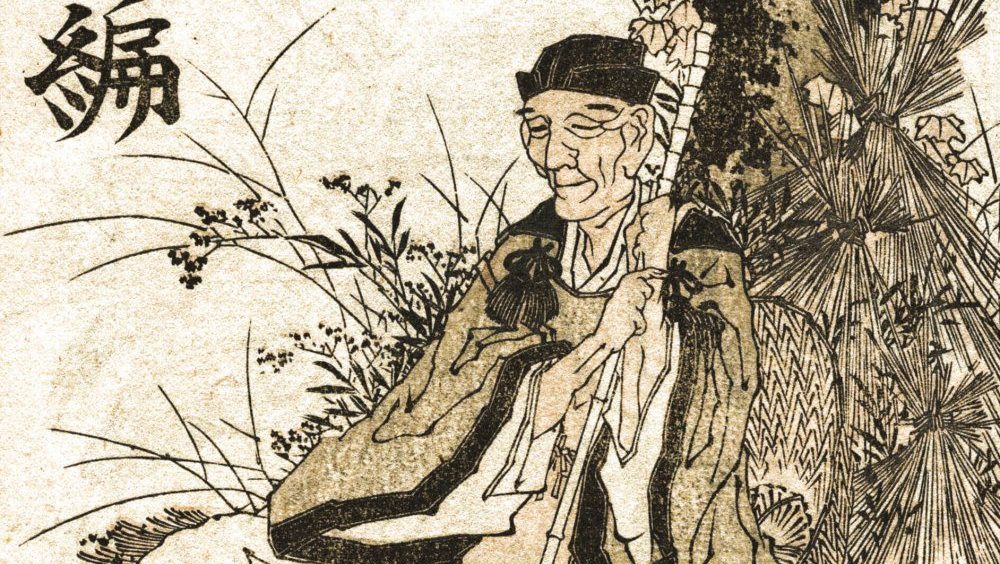
Matsuo Bashō (1644–1694) is the most revered poet in the Japanese tradition and the supreme master of haiku — the compact, seventeen-sound form that finds vast meaning in a single fleeting image. Writing in the early Edo period, he transformed haiku from a witty social game into a profound contemplative art.
Steeped in Zen Buddhism and the classical aesthetics of his country, Bashō made his life a series of long journeys on foot, turning travel into spiritual practice and his observations into poetry of startling clarity. His work draws eternity out of the ordinary — a frog, a crow, an autumn road — and continues to shape how the world understands nature, attention, and art.
On This Page: Early Life and Education · Literary Career and Major Works · Style and Themes · Later Life and Legacy · Notable Works · Frequently Asked Questions · Related Poets
Early Life and Education
Bashō was born Matsuo Kinsaku in 1644 near Ueno, in Iga Province (now Mie Prefecture), the son of a low-ranking samurai. Though the family was not wealthy, he received a grounding in classical Chinese and Japanese literature.
As a young man, he served a local lord with a love of poetry, which kindled his own; when his patron died, Bashō left samurai life behind and gave himself to verse. He moved first to Kyoto and then to Edo (modern Tokyo), where he joined the lively world of haikai no renga — comic linked verse — that would become the seedbed of his art.
Literary Career and Major Works
Bashō’s growth as a poet was also a turn toward simplicity. By the 1670s he was an admired poet and teacher in Edo, but he soon withdrew from city life to a plain hut beside a banana plant — bashō in Japanese — from which he took his name.
His verse deepened from clever wordplay into spiritual reflection, shaped by Zen and an intense attention to nature. The great phase of his work was bound up with travel: Nozarashi Kikō (The Records of a Weather-Exposed Skeleton, 1684) recorded his first long walking journey, and his masterpiece, Oku no Hosomichi (The Narrow Road to the Deep North, 1689), wove prose and haiku into a meditative diary of a 2,400-kilometre trek through northern Japan. It remains one of the treasures of Japanese literature.
Style and Themes
Bashō’s art rests on attention, restraint, and the beauty of the passing moment. His haiku embody the Zen-rooted values of wabi-sabi — simplicity, transience, and the loveliness found in impermanence.
They are spare and understated, trusting a single concrete image to open into depth, and they often hinge on a quiet juxtaposition: motion against stillness, sound against silence. He urged poets to learn directly from things themselves — “learn of the pine from the pine” — rather than from convention.
His most famous poem is exactly this kind of moment: an old, still pond, a frog that leaps in, and the sound of water breaking and then restoring the silence. Solitude, the seasons, the passage of time, and the unity of self and nature run through everything he wrote.
Later Life and Legacy
Bashō kept walking and teaching to the end. In his later years he continued to travel the country, treating poetry as a discipline and a spiritual path and gathering the disciples who would carry his school forward.
Often in poor health, he never stopped refining his ideal of simplicity and truth. He died in Osaka on November 28, 1694, during yet another journey, surrounded by his followers; his final haiku imagines him fallen ill on the road while his dreams wander on across withered fields. His influence is hard to overstate: he made haiku a serious art and inspired the later masters Yosa Buson, Kobayashi Issa, and Masaoka Shiki.
In the twentieth century, his work drew Western admirers from Ezra Pound to the Beat poets, who found in him a bridge between poetry and mindfulness.
Notable Works
Bashō’s masterpieces are his haibun travel journals, which interleave prose and haiku:
- The Narrow Road to the Deep North (Oku no Hosomichi, 1689): His masterpiece — a travel diary blending prose and haiku, recounting a long journey through northern Japan as both physical and spiritual pilgrimage.
- The Records of a Weather-Exposed Skeleton (Nozarashi Kikō, 1684): The account of his first great walking journey, where the hardship of the road becomes a path to insight.
- The Knapsack Notebook (Oi no Kobumi, 1687): A reflective travel journal exploring the discipline and meaning of a life devoted to poetry.
- A Visit to Kashima Shrine (Kashima Kikō, 1687): A short travel sketch recording a moon-viewing pilgrimage to the Kashima Shrine.
Frequently Asked Questions
Quick answers to the questions readers most often ask about Matsuo Bashō.
What is Matsuo Bashō best known for?
Being the greatest master of haiku and the author of The Narrow Road to the Deep North, a celebrated travel diary mixing prose and verse. He raised haiku from a social pastime to a serious, contemplative art.
What is a haiku?
A short Japanese poem built on a single vivid image, traditionally counted as seventeen sound-units and usually rendered in English as three lines of five, seven, and five syllables. It often turns on a season or a moment in nature. Bashō was its supreme master.
What is The Narrow Road to the Deep North?
Bashō’s masterpiece (Oku no Hosomichi, 1689): a haibun — a blend of prose and haiku — recording a long, arduous journey through the remote north of Japan as both physical travel and spiritual quest.
What is Bashō’s most famous poem?
His haiku of the old pond, in which a frog jumps into the water and breaks the silence with the sound of the splash. It is among the most famous poems in world literature and a perfect example of his art.
What are the main themes in Bashō’s poetry?
Nature and the seasons, impermanence and the passing moment, solitude and travel, and the Zen-inspired unity of the self with the natural world.
Related Poets
Readers who admire Bashō often turn to these poets:
- Yosa Buson: An 18th-century master who revived Bashō’s ideals and brought a painter’s eye to haiku.
- Kobayashi Issa: A later haiku poet beloved for his warmth, humor, and tenderness toward small creatures.
- Masaoka Shiki: The modern reformer who shaped the term “haiku” and renewed the form for a new age.
- Saigyō: The wandering medieval monk-poet whose travels and Buddhist spirit deeply influenced Bashō.
- Ryōkan: A Zen monk and poet whose gentle simplicity echoes Bashō’s contemplative vision.