Clement Clarke Moore (1779–1863) was an American scholar and poet best known for “A Visit from St. Nicholas,” the Christmas poem that begins “’Twas the night before Christmas” and was first published anonymously in 1823. A professor of Hebrew and Greek at the General Theological Seminary in New York, he wrote a Hebrew lexicon, gave the land on which the seminary stands, and laid out much of the Manhattan neighborhood of Chelsea.
Our view: Moore is the great accidental poet of American literature. A serious, conservative scholar who hoped to be remembered for his learning, he is remembered instead for 56 playful lines written for his children, which gave the world its picture of Santa Claus and are still read aloud every Christmas Eve two centuries later.
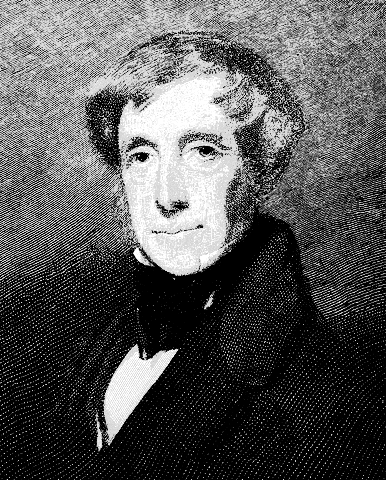
At a Glance
- Born
- July 15, 1779, Chelsea, New York City
- Died
- July 10, 1863 (aged 83), Newport, Rhode Island
- Era
- Romantic (American)
- Known for
- “A Visit from St. Nicholas” (“’Twas the Night Before Christmas”)
- Education
- Columbia College (BA 1798, MA 1801)
- Occupation
- Professor, Hebrew scholar, poet, and landowner
- Spouses
- Catharine Elizabeth Taylor (married 1813; died 1830)
- Honors
- Honorary Doctor of Laws, Columbia College (1829)
- Buried
- Trinity Church Cemetery, Manhattan
ON THIS PAGE
Why He Matters · Timeline · Life and Career · Poetry and Style · Famous Poems and Books · Legacy · FAQ
Related Poets
Why Clement Clarke Moore Matters
Few poems have shaped a holiday the way “A Visit from St. Nicholas” has. It fixed the details of the modern Santa Claus: his arrival on Christmas Eve, his flying sleigh and eight named reindeer, his trip down the chimney, the stockings, and above all his personality, a “right jolly old elf” with a belly “like a bowlful of jelly.” It may be the best-known poem ever written by an American, and it is still read aloud in homes, schools, and churches every December.
Moore also left a mark on New York. He gave the land for the General Theological Seminary, which still stands in Chelsea, and he divided his family estate into the orderly streets and townhouses that shaped the neighborhood. His life shows how a single light-hearted poem can outlast a career of serious scholarship.
Clement Clarke Moore Timeline
These are the key dates in Moore’s life, from his family’s Chelsea estate to the most famous Christmas poem in English.
- 1779
- Born on July 15 at Chelsea, his mother’s family estate on the west side of Manhattan, the son of Benjamin Moore, later Episcopal Bishop of New York, and Charity Clarke Moore.
- 1798
- Graduates from Columbia College as valedictorian of his class.
- 1801
- Receives his master’s degree from Columbia, where his father is now president.
- 1804
- Anonymously publishes a pamphlet attacking Thomas Jefferson’s religious views in Notes on the State of Virginia.
- 1809
- Publishes A Compendious Lexicon of the Hebrew Language.
- 1813
- Marries Catharine Elizabeth Taylor; his parents give him the Chelsea estate, and he joins Columbia’s board of trustees.
- 1818
- Publishes a pamphlet protesting the city’s new street grid, which would cut through his land.
- 1821
- Begins teaching Hebrew and Greek literature at the General Theological Seminary, for which he gives land from his estate.
- 1822
- By family tradition, writes “A Visit from St. Nicholas” for his children at Christmas.
- 1823
- The poem appears anonymously in the Troy Sentinel on December 23, sent in by a family friend.
- 1827
- Construction of the seminary’s buildings begins on his former orchard.
- 1829
- Receives an honorary Doctor of Laws from Columbia.
- 1830
- His wife Catharine dies, leaving him with young children.
- 1837
- The poem is first credited to him in print, in The New-York Book of Poetry.
- 1844
- Publishes Poems, including “A Visit from St. Nicholas,” at his children’s urging.
- 1850
- Retires from the seminary and publishes a biography of the Albanian hero Scanderbeg.
- 1855
- His daughter Mary paints illustrations for the first color edition of the poem.
- 1863
- Dies on July 10 at his summer home in Newport, Rhode Island, five days before his 84th birthday.
- 1899
- His remains are moved to Trinity Church Cemetery in upper Manhattan.
- 1911
- The Church of the Intercession begins an annual Christmas service with a reading of the poem and a procession to his grave.
- 1968
- A playground opens in Clement Clarke Moore Park, in Chelsea, named in his honor.
Life and Career
Moore spent almost his whole life in New York, as a scholar, a churchman, and the owner of a large estate. His poem was a small sideline to that life, and he was slow to claim it.
A Bishop’s Son (1779–1812)
Clement Clarke Moore was born on July 15, 1779, at Chelsea, the country estate of his mother’s family on the west side of Manhattan, then far north of the city. His father, Benjamin Moore, became rector of Trinity Church, Episcopal Bishop of New York, and president of Columbia College. Clement graduated from Columbia as valedictorian in 1798 and took his master’s degree in 1801.
He was a scholar by temperament and a firm conservative in religion and politics. In 1804, he published an anonymous pamphlet attacking Thomas Jefferson’s views on religion, and in 1809 he produced A Compendious Lexicon of the Hebrew Language, an early American reference work on the language.
Chelsea and the Seminary (1813–1830)
In 1813, Moore married Catharine Elizabeth Taylor, and his parents gave him the Chelsea estate. The couple had nine children. Moore gave part of the estate, an apple orchard, to the Episcopal Church for the General Theological Seminary, where he taught Hebrew and Greek literature from 1821, and its buildings began to rise there in 1827. He also served for more than 40 years as a trustee of Columbia.
When the city’s 1811 street plan threatened to cut through his land, Moore protested in print, calling the grid “a tyranny no monarch in Europe would dare to exercise.” He lost, and he turned instead to developing the estate himself, dividing it into lots with rules about what could be built. The result was the handsome residential neighborhood that is now Chelsea. Catharine died in 1830, leaving him to raise their surviving children.
The Night Before Christmas (1822–1844)
According to family tradition, Moore wrote “A Visit from St. Nicholas” for his children in 1822, taking some inspiration from a local Dutch handyman. He did not publish it. On December 23, 1823, it appeared anonymously in the Troy Sentinel, in upstate New York, after a family friend sent it in. It spread quickly through newspapers and almanacs, and in 1837 it was first credited to Moore in The New-York Book of Poetry.
Moore, who seems to have felt the verse was beneath a scholar, finally included it in his book Poems in 1844, at his children’s urging. For generations, descendants of Henry Livingston Jr., a Hudson Valley poet, have claimed that Livingston wrote it. The scholar Don Foster supported that view in 2000, and MacDonald P. Jackson in 2016, but two separate studies published in 2023 concluded that Moore was much more likely to be the author.
Later Years (1845–1863)
Moore retired from the seminary in 1850, the year he published a biography of the Albanian national hero, George Castriot, Surnamed Scanderbeg, King of Albania. In his last years, he spent his summers in Newport, Rhode Island, with his daughters, and he died there on July 10, 1863, five days before his 84th birthday. He was first buried in the churchyard of St. Luke in the Fields, a parish he had helped to found, and in 1899 his remains were moved to Trinity Church Cemetery in upper Manhattan.
Poetry and Style
Most of Moore’s poetry is conventional occasional verse: poems for family members, moral reflections, and light pieces written in the polished style of the 18th century. His Poems of 1844 shows a cultivated amateur rather than a professional writer, and few of its pieces are read today.
“A Visit from St. Nicholas” is the great exception. Its galloping anapestic rhythm, its vivid domestic detail, and its sense of fun give it an energy none of his other poems has. It succeeds because it forgets to be learned: it is told in plain words by a startled father, and every image, from the “miniature sleigh” to the pipe smoke circling St. Nick’s head “like a wreath,” is concrete and exact.
His weaknesses are clear from the rest of his work. It can be stiff, moralizing, and dated, and even his admirers agree that he was a one-poem poet. But that one poem shows a natural storyteller’s gift for rhythm and timing.
Famous Poems and Books
Moore wrote scholarship, pamphlets, and verse, but one poem made his name.
- A Visit from St. Nicholas (1823): The Christmas Eve poem that begins “’Twas the night before Christmas” and created the modern Santa Claus.
- A Compendious Lexicon of the Hebrew Language (1809): His two-volume Hebrew dictionary, long a standard reference.
- Poems (1844): His only collection of verse, in which he first claimed “A Visit from St. Nicholas” in print.
- George Castriot, Surnamed Scanderbeg, King of Albania (1850): His biography of the 15th-century Albanian leader.
Reputation and Legacy
Moore’s scholarly work is now mostly forgotten, but his poem has never been out of print. It has appeared in countless illustrated editions, been parodied and adapted endlessly, and done more than any other text to create the Santa Claus of American Christmas. The authorship debate has only added to its fame, and the weight of recent evidence continues to favor Moore.
New York remembers him too. Since 1911, the Church of the Intercession in upper Manhattan has held a Christmas service each year with a reading of the poem and a procession to his grave in Trinity Church Cemetery, and residents of Chelsea gather each December for a reading in his old neighborhood, where a small park bears his name. The General Theological Seminary still occupies the land he gave it.
Frequently Asked Questions
These are the questions readers most often ask about Clement Clarke Moore.
Who Was Clement Clarke Moore?
Clement Clarke Moore (1779–1863) was an American professor, Hebrew scholar, and poet, best known as the author of “A Visit from St. Nicholas,” or “’Twas the Night Before Christmas.” He taught at the General Theological Seminary in New York, on land he had donated.
Did Clement Clarke Moore Really Write “’Twas the Night Before Christmas”?
Most scholars believe he did. Descendants of Henry Livingston Jr. have claimed the poem for him, but Moore published it as his own in 1844, and studies published in 2023 found Moore much more likely to be the author.
Why Did Clement Clarke Moore Write the Poem?
According to family tradition, he wrote it in 1822 as a Christmas present for his children. He did not intend to publish it, and it appeared anonymously after a family friend sent it to a newspaper.
Where Was Clement Clarke Moore Born?
He was born on July 15, 1779, at Chelsea, his family’s estate on the west side of Manhattan in New York City. The area is now the Chelsea neighborhood.
Where Is Clement Clarke Moore Buried?
He is buried in Trinity Church Cemetery in upper Manhattan. He died in Newport, Rhode Island, in 1863, and his remains were moved to Trinity Church Cemetery in 1899.
Related Poets
These poets wrote for the same season, or in the same young American literary world.
- Henry Wadsworth Longfellow: The most popular American poet of the 19th century, and a master of story told in verse.
- Christina Rossetti: The English poet of “In the Bleak Midwinter,” the other great Christmas poem of the century.
- Edgar Allan Poe: A New York contemporary whose “The Bells” opens with the jingle of sleigh bells.
- Walt Whitman: The poet of 19th-century New York, who celebrated the city Moore helped to build.