QUICK FACTS
Born: June 27, 1872, Dayton, Ohio, USA
Died: February 9, 1906 (aged 33), Dayton, Ohio, USA
Era: Post-Reconstruction (late 19th to early 20th century American)
Occupation: Poet, novelist, short-story writer, lyricist
Education: Central High School, Dayton (graduated 1891)
Known for: “We Wear the Mask,” “Sympathy,” and the collection Lyrics of Lowly Life
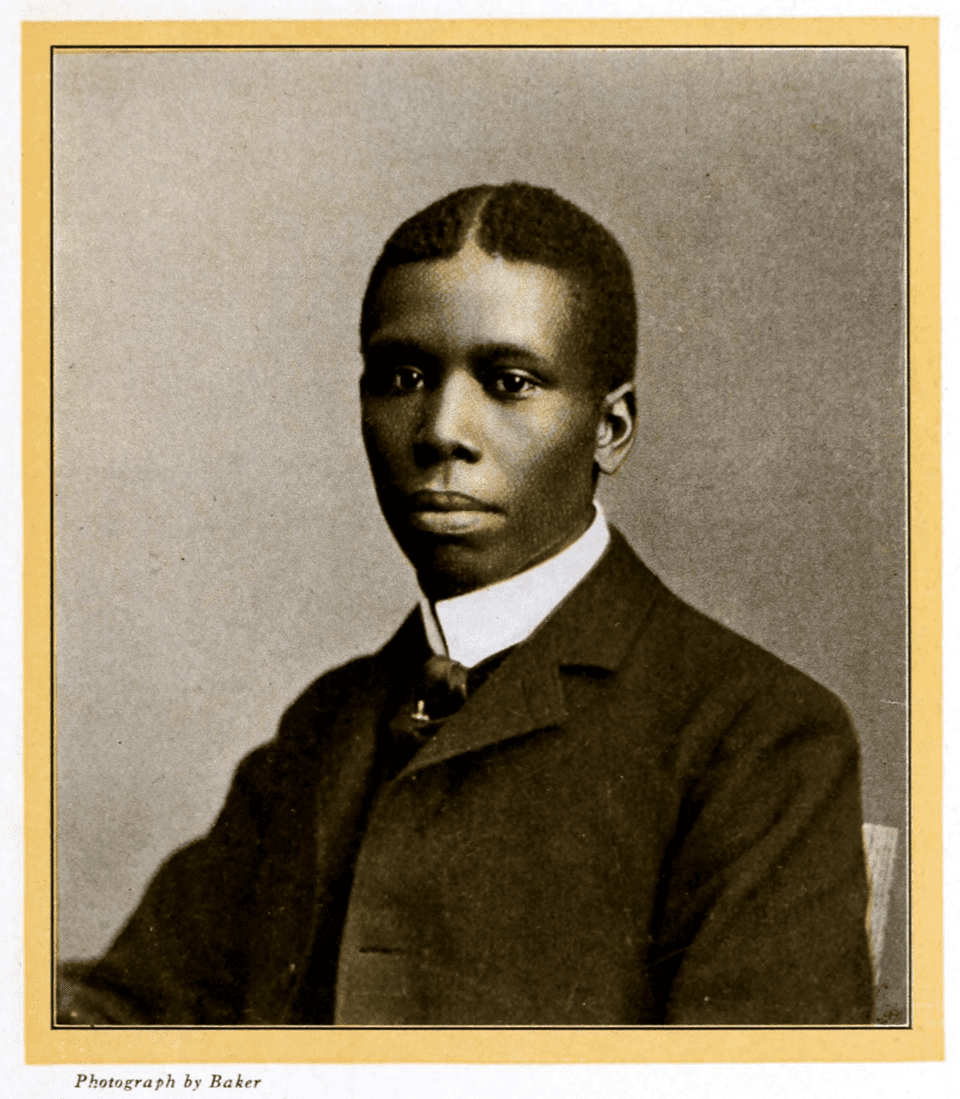
Paul Laurence Dunbar was the first African American poet to win a national and international audience and to make his living by the pen. Born in 1872 to parents who had been enslaved, he turned the grief, humor, music, and guarded endurance of Black American life into verse that reached white and Black readers alike. By the time tuberculosis killed him at thirty-three, he had published a dozen volumes of poetry along with novels, short stories, and song lyrics — an astonishing output for so short a life.
His legacy carries a deep tension. He is now most loved for poems in formal English of piercing dignity — “We Wear the Mask,” “Sympathy” — yet in his lifetime he was famous chiefly for dialect poems that critics and audiences pressed upon him, an acclaim that hardened into a cage. From that bind came his enduring images: the smiling mask worn over suffering, and the caged bird whose song is also a cry. The writers of the Harlem Renaissance built on the ground he cleared, and his reach still runs through later literature, down to the title Maya Angelou drew from his work.
ON THIS PAGE
Born to Freed Slaves in Dayton · The Only Black Student at Central High · The Elevator and Oak and Ivy · Howells, Fame, and the Dialect Trap · Marriage, Illness, and Early Death · Dialect, the Mask, and a Lasting Voice · Notable Poems · Frequently Asked Questions · Related Poets
Born to Freed Slaves in Dayton
Dunbar was born in Dayton, Ohio, on 27 June 1872, to parents who had been enslaved in Kentucky before the Civil War. His father, Joshua, had escaped slavery and returned to fight for the Union; his mother, Matilda, had been freed by the war’s end. The marriage did not last — the couple separated when Paul was a small child — and it was Matilda who raised him, working as a washerwoman and feeding his early love of words with the stories and songs she carried out of slavery.
The gift showed early. Dunbar is said to have written his first poem at six and given his first public recitation at nine. His mother’s encouragement and his own voracious reading turned a poor Black child in post-war Ohio into a young man already certain of his vocation, long before the world was ready to reward it.
The Only Black Student at Central High
At Dayton’s Central High School, Dunbar was the only Black student in his class, and he made himself impossible to overlook. He served as president of the literary society, edited the school newspaper, and wrote the class poem. Among his classmates and friends was Orville Wright, who with his brother Wilbur would later invent powered flight — and who, in the meantime, owned a printing press.
That press gave Dunbar his first venture into print. In 1890 the Wrights helped him produce the Dayton Tattler, a short-lived newspaper aimed at the city’s Black community, which Dunbar edited and published. He graduated in 1891 full of ambition and ran straight into the wall that race built across his path.
The Elevator and Oak and Ivy
For all his record as a star student, no Dayton employer would give a Black graduate the clerical or professional work he was plainly qualified for. Dunbar took the job he could get: operating an elevator in a downtown office building for four dollars a week. He wrote between floors, and he kept writing.
In 1893 he gathered his poems into a first collection, Oak and Ivy, borrowing the printing costs and selling copies for a dollar to the passengers in his elevator. That same year, at the World’s Columbian Exposition in Chicago, he met Frederick Douglass, who hired him as a clerk and praised him as one of the finest voices his race had produced. The young poet’s reputation was beginning to travel.
Howells, Fame, and the Dialect Trap
The turning point came in 1896. Dunbar’s second collection, Majors and Minors (1895), reached William Dean Howells, the most powerful critic in America, who gave it a glowing review in Harper’s Weekly. Overnight Dunbar was a national figure. The notice led to Lyrics of Lowly Life (1896), introduced by Howells, a contract with the New York house Dodd, Mead, a steady salary, and a six-month reading tour of England in 1897.
But Howells had singled out the dialect poems for special praise, and that endorsement became a trap. Publishers and audiences now wanted Dunbar to supply more verse in “Negro dialect,” the register white readers found charming, while the poems he valued most — his formal English lyrics of protest and dignity — were treated as secondary. The recognition he had fought for arrived bolted to a constraint he would spend the rest of his life resenting.
Marriage, Illness, and Early Death
After his return from England, Dunbar took a clerkship at the Library of Congress and, in 1898, married the writer Alice Ruth Moore, herself a gifted author who became known as Alice Dunbar-Nelson. The marriage was passionate but troubled, and the couple separated in 1902. His range, meanwhile, kept widening: he published novels, including The Sport of the Gods (1902), and wrote the lyrics for In Dahomey (1903), the first all-Black musical to play a major Broadway theatre.
His body could not keep pace with his work. Diagnosed with tuberculosis around 1900, Dunbar grew steadily weaker through his final years, his decline deepened by the alcohol he leaned on against the disease. He died in Dayton on 9 February 1906, at the age of thirty-three, his major reputation already secure and his fullest powers still unspent.
Dialect, the Mask, and a Lasting Voice
Dunbar’s achievement is best understood through the divided nature of his work and the images that hold it together.
Two Languages, One Poet
Dunbar wrote in two registers. His dialect poems — “When Malindy Sings,” “A Negro Love Song,” “Little Brown Baby” — render Black folk speech with real warmth, music, and craft, even as they were shaped by, and risked feeding, the minstrel expectations of white audiences. His poems in formal English carry his sharpest feeling and his clearest protest. He knew the difference, and he ached to be judged for the second as fully as the first.
We Wear the Mask
His rondeau “We Wear the Mask” is the poem that distils his whole predicament: the grinning face Black Americans were forced to present to the world while their real grief stayed hidden beneath it. Spoken in a collective “we,” it turns personal pain into a shared testimony, and it remains one of the most taught and analysed poems in African American literature.
The Caged Bird and the Legacy
In “Sympathy,” Dunbar likens himself to a caged bird beating its wings against the bars, and the poem’s refrain — that he knows why the caged bird sings — became one of the defining metaphors of African American expression. Maya Angelou took the title of her landmark memoir from that line. The poets of the Harlem Renaissance claimed Dunbar as a founder, and his name now marks schools across the country; the United States honoured him with a commemorative stamp in 1975.
Notable Poems
- We Wear the Mask: His most celebrated poem, a rondeau on the smiling face Black Americans wore over their suffering.
- Sympathy: The source of “I know why the caged bird sings,” a searing image of confinement and the longing for freedom.
- When Malindy Sings: A dialect tribute to the natural power of a singer’s voice, set above mere book-learned music.
- A Negro Love Song: A lilting dialect refrain — “Jump back, honey, jump back” — drawn from the rhythms of courtship and work song.
- Little Brown Baby: A tender dialect lullaby from a father to his child, one of his warmest domestic portraits.
- Ode to Ethiopia: A proud address to Black people and their heritage, urging dignity and remembrance.
- Life: A brief, balanced lyric weighing the sorrow and joy of ordinary existence.
Frequently Asked Questions
What Is Paul Laurence Dunbar Best Known For?
Dunbar is best known as the first African American poet to gain national and international fame, and for poems such as “We Wear the Mask” and “Sympathy.” He wrote in both formal English and Black dialect, and also produced novels, short stories, and song lyrics.
Was Paul Laurence Dunbar the First Famous African American Poet?
He was the first African American poet to win widespread national and international acclaim and to support himself by his writing. Earlier Black poets such as Phillis Wheatley and Frances Ellen Watkins Harper preceded him, but none reached Dunbar’s level of mainstream fame in his lifetime.
What Does “We Wear the Mask” Mean?
The poem describes the false, smiling face that Black Americans were compelled to show the world while hiding their true pain. The “mask” stands for the survival strategy of concealing grief and anger behind cheerfulness, and the poem speaks for a whole community rather than one person.
Did “Sympathy” Inspire Maya Angelou’s “I Know Why the Caged Bird Sings”?
Yes. Maya Angelou took the title of her 1969 memoir, I Know Why the Caged Bird Sings, from the refrain of Dunbar’s poem “Sympathy,” in which a caged bird’s song expresses the anguish and longing of the unfree.
Why Did Dunbar Write in Dialect?
Dunbar used dialect to capture the speech, humor, and music of Black folk life, and it was these poems that brought him the most fame. But the public’s appetite for dialect verse also confined him: he wanted equal recognition for his poems in standard English, and he came to resent being valued mainly for dialect.
Related Poets
- Phillis Wheatley: The first published African American poet, an enslaved woman whose 18th-century verse opened the tradition Dunbar inherited.
- Frances Ellen Watkins Harper: The pioneering Black abolitionist poet whose work preceded Dunbar’s by a generation.
- James Whitcomb Riley: The popular “Hoosier Poet” and dialect writer whose encouragement helped launch Dunbar’s career.
- James Weldon Johnson: The poet and activist who carried Black American verse forward, later urging poets to move beyond dialect.
- Langston Hughes: The central voice of the Harlem Renaissance, who built directly on the ground Dunbar cleared.