QUICK FACTS
Born: Baptised 24 August 1591, Cheapside, London, England
Died: Buried 15 October 1674 (aged 83), Dean Prior, Devon, England
Era: Cavalier (Sons of Ben; 17th century)
Occupation: Poet and Anglican cleric (vicar of Dean Prior)
Education: Goldsmith’s apprenticeship; St John’s College, Cambridge (BA, 1617)
Known for: “To the Virgins, to Make Much of Time” (“Gather ye rosebuds while ye may”) and the collection Hesperides
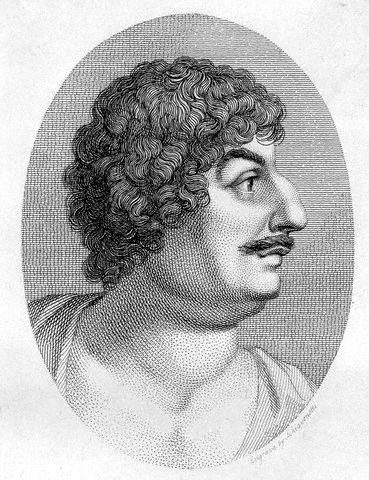
Robert Herrick wrote the four words half the English-speaking world can finish — “Gather ye rosebuds while ye may” — and built an entire book around the conviction behind them: that beauty fades, time runs, and the moment must be seized. He was the most original of the “Sons of Ben,” the convivial circle of Cavalier poets who took Ben Jonson as their master, and his single collection, Hesperides, gathered some twelve hundred short lyrics of astonishing polish and music.
The paradox of his life is that this most worldly and sensuous of poets spent decades as a country parson in remote Devon, half-resenting the isolation and half-feeding on it. From village May games, harvest suppers, garden flowers, and a parade of mistresses who were probably never real, he made some of the most exquisite miniature poems in the language. The world ignored them for a century and a half. Then it caught up, and Herrick took his place among the finest English lyricists.
ON THIS PAGE
A London Goldsmith’s Son · The Tribe of Ben · The Vicar of Dean Prior · Civil War, Ejection, and Hesperides · Restoration and Final Years · Flowers, Festivals, and the Fleeting Moment
Notable Poems · Frequently Asked Questions · Related Poets
A London Goldsmith’s Son
Herrick was born in Cheapside, London, and baptised on 24 August 1591, the seventh child of a prosperous goldsmith, Nicholas Herrick. The family’s comfort came with an early shadow: when Robert was barely a year old, his father died in a fall from a fourth-floor window, an event never fully explained and possibly suicide. The boy grew up under the wing of wealthy relatives in the goldsmiths’ world of the City.
At sixteen Herrick was apprenticed to his uncle, the rich court goldsmith Sir William Herrick, and seemed set for the family trade. He broke that path to follow his mind instead, entering the University of Cambridge in 1613 — relatively late, in his early twenties — and taking his degree in 1617. The craftsman’s training was not wasted: a jeweller’s eye for small, finished, perfectly set objects runs straight through his verse.
The Tribe of Ben
In the London of the 1620s, Herrick fell under the spell of Ben Jonson and became one of the devoted younger poets who called themselves the “Sons of Ben” or the “Tribe of Ben.” They gathered in taverns around the great man, traded verses, and took from him a love of classical clarity, balance, and craftsmanship over the knotty difficulty of the rival metaphysical school. Herrick wrote several poems in Jonson’s honour and learned to channel the Roman lyric poets — Horace, Catullus, Ovid, and the Greek-styled Anacreon — into limpid English.
This is the formation that shaped everything he wrote: the conviviality, the toast to friendship and wine, the carpe diem urgency, and above all the conviction that a poem should be a small, shapely, durable thing. Herrick took holy orders in 1623, joining the church even as his poetry stayed firmly turned toward the pleasures of this world.
The Vicar of Dean Prior
In 1629 Herrick was made vicar of Dean Prior, a small parish in rural Devon, and there he stayed for most of his life. By his own grumbling account he found the place dull and the people coarse, a long way from the wit of London. Yet the exile was the making of him as a poet. The Devon countryside handed him his richest material: the rhythms of the farming year, May Day and harvest, country superstitions and festivals, hedgerow flowers, and the small domestic world of his long-serving housekeeper, Prudence Baldwin.
Herrick never married. The women who fill his poems — Julia, Corinna, Anthea, Electra — are almost certainly invented muses rather than flesh-and-blood lovers, names on which to hang his fantasies of silk, perfume, and ripe fruit. The contrast is one of his abiding charms: a celibate country clergyman composing the most sensuous love lyrics of his age.
Civil War, Ejection, and Hesperides
Herrick’s royalist loyalties cost him his living. When the English Civil War turned against the king and the victorious Parliament demanded subscription to the Solemn League and Covenant, Herrick refused, and in 1647 he was ejected from Dean Prior. He returned to London, dependent on the charity of friends and family, and used the unwanted leisure to do the one thing that would secure his name.
In 1648 he published Hesperides; or the Works both Human and Divine of Robert Herrick, dedicated to the Prince of Wales. It collected roughly twelve hundred secular poems alongside a religious section, “His Noble Numbers” — effectively his complete life’s work in a single volume. In the grey, war-torn, Puritan-dominated mood of the moment, a book overflowing with rosebuds, kisses, and May games found almost no audience. It sank, and Herrick’s reputation sank with it.
Restoration and Final Years
The wheel turned again in 1660. With Charles II restored to the throne, Herrick — who had earlier written verses welcoming royal births — petitioned to recover his parish, and in 1662 he returned to Dean Prior as vicar. He lived out his last years quietly in the Devon he had once complained about, and died there in October 1674. His exact date of death is unknown; he was buried on 15 October, aged eighty-three.
For nearly a century and a half he was all but forgotten, a minor name in dusty anthologies. The nineteenth century rediscovered him, reprinting Hesperides and recognising in its small perfect lyrics a master of sound and feeling. Today the line “Gather ye rosebuds while ye may” is among the most familiar in English, and Herrick is read as one of the great lyric voices of the seventeenth century.
Flowers, Festivals, and the Fleeting Moment
Herrick’s poems are short, bright, and deceptively simple, and their charm rests on three qualities that repay a second reading.
Carpe Diem and the Rosebud
Time is Herrick’s great subject. “To the Virgins, to Make Much of Time” urges its hearers to seize youth before it withers, and the same awareness — that the flower opening this morning will be gone by night — colours dozens of his poems. The surface is sunny and sensual; underneath runs a steady, gentle melancholy that keeps the verse from ever turning merely pretty.
The Music of Small Things
No English poet has done more with the miniature. Herrick is a master of the brief lyric and the epigram, polishing a handful of lines until they ring. “Delight in Disorder” praises the artful carelessness of a half-undone dress, and “Upon Julia’s Clothes” turns three short stanzas into a famous study of motion and silk. The goldsmith’s son made jewels of language, exact in sound and finish.
An English Pastoral World
Herrick fused the classical pastoral he learned from Jonson and the Romans with the real customs of an English village. “Corinna’s Going A-Maying” and “The Hock-Cart” preserve May Day and harvest rituals with affectionate detail, and his flower poems give country plants the weight of emblems. That his book also contains a body of devotional verse, the “Noble Numbers,” shows a poet at ease holding the sacred and the profane in the same hand.
Notable Poems
- To the Virgins, to Make Much of Time: The definitive carpe diem lyric, opening with “Gather ye rosebuds while ye may.”
- Delight in Disorder: A witty celebration of artful untidiness, finding more allure in a dress half-undone than in perfect neatness.
- Upon Julia’s Clothes: Three flawless stanzas on the shimmer and flow of silk in motion, a triumph of sound and brevity.
- Corinna’s Going A-Maying: A radiant invitation to greet the May morning, blending classical pastoral with English village custom.
- Cherry-Ripe: A brief, sensuous lyric likening a mistress’s lips to ripe fruit offered for sale.
- To Daffodils: A tender meditation on transience, mourning the short life of the flowers as a mirror of our own.
- The Night-Piece, to Julia: A gentle nocturne lighting Julia’s way through the dark toward the waiting poet.
Frequently Asked Questions
What Is Robert Herrick Best Known For?
Herrick is best known for the carpe diem poem “To the Virgins, to Make Much of Time,” whose opening line is “Gather ye rosebuds while ye may.” He is also remembered for his single great collection, Hesperides (1648), and for lyrics such as “Upon Julia’s Clothes” and “Delight in Disorder.”
What Does “Gather Ye Rosebuds While Ye May” Mean?
It is an urging to make the most of youth and pleasure before they pass, the central idea of carpe diem, or “seize the day.” The rosebuds stand for fleeting beauty: like flowers, youth blooms briefly and is soon gone, so it should be enjoyed while it lasts.
Was Robert Herrick a Cavalier Poet?
Yes. Herrick is counted among the Cavalier poets, the royalist writers of the mid-seventeenth century, and is regarded as the most original of the “Sons of Ben,” the followers of Ben Jonson. His verse favours classical polish, lyric grace, and worldly pleasure over the dense argument of the metaphysical poets.
What Is Hesperides?
Hesperides (1648) is the only book Herrick published, gathering roughly twelve hundred of his secular poems together with a section of religious verse called “His Noble Numbers.” It contains nearly all his best-known work and is the foundation of his modern reputation.
Was Robert Herrick Married?
No. Herrick was a bachelor his whole life. The many women named in his poems — Julia, Corinna, Anthea, and others — are generally thought to be imaginary muses rather than real lovers.
Related Poets
- Ben Jonson: The master and model of the “Tribe of Ben,” whose classical discipline shaped Herrick’s whole art.
- Thomas Carew: A fellow Cavalier and son of Ben, polished and sensuous in much the same vein.
- Richard Lovelace: The Cavalier poet of honour and devotion, famous for verses written from prison to Lucasta.
- Sir John Suckling: The wittiest and most rakish of the Cavaliers, a courtier-poet of easy charm.
- Andrew Marvell: A contemporary master of the carpe diem theme, pressing the same urgency of time to deeper, stranger ends.