Andrew Marvell (1621–1678) was an English poet best known for “To His Coy Mistress,” a witty seduction poem about the shortness of life, published after his death in 1681. In his own time, he was known as a tutor, a colleague of John Milton in Cromwell’s government, the Member of Parliament for Hull for almost 20 years, and a sharp political satirist.
Our view: Marvell wrote some of the most cunning lyric poems in English and then let almost no one read them. His gift was balance: he could hold desire and death, the garden and the state, royalist sympathy and republican service in perfect tension without letting either side win. That refusal to settle, long mistaken for coolness, is what makes him feel so modern today.
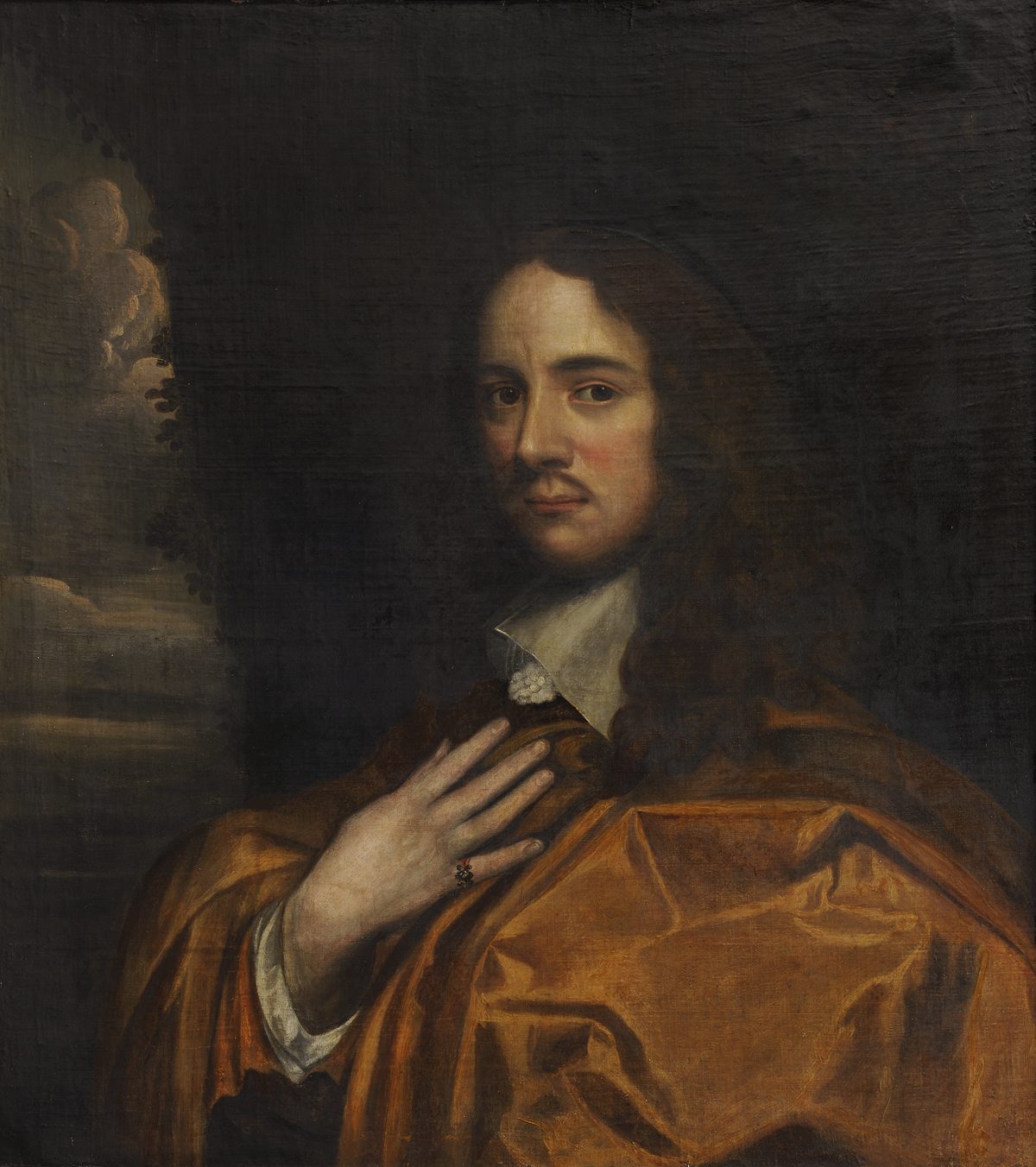
At a Glance
- Born
- March 31, 1621, Winestead, Yorkshire, England
- Died
- August 16, 1678 (aged 57), London, England
- Era
- Metaphysical
- Known for
- “To His Coy Mistress,” “The Garden,” and “An Horatian Ode upon Cromwell’s Return from Ireland”
- Education
- Hull Grammar School and Trinity College, Cambridge (BA, 1639)
- Occupation
- Poet, tutor, civil servant, satirist, and Member of Parliament
- Buried
- St Giles in the Fields, London
ON THIS PAGE
Why He Matters · Timeline · Life and Career · Poetry and Style · Famous Poems and Books · Legacy · FAQ
Related Poets
Why Andrew Marvell Matters
Marvell wrote the most brilliant argument for seizing the day in English. “To His Coy Mistress” turns a familiar seduction theme into a meditation on death, with time’s winged chariot always at the speaker’s back. Around it sits a small body of lyrics, including “The Garden,” “The Definition of Love,” and the Mower poems, that are as clever, musical, and exact as anything written in the 17th century.
He also matters because of how he thought. Marvell lived through civil war, the execution of a king, Cromwell’s rule, and the return of the monarchy, and he served more than one side. His poems never simplify that experience. “An Horatian Ode” praises Cromwell and honors the king he overthrew in the same breath. Readers who distrust easy answers find in Marvell a poet who shares their doubts.
Andrew Marvell Timeline
These are the key dates in Marvell’s life, from a Yorkshire rectory to Parliament and posthumous fame.
- 1621
- Born on March 31 at Winestead, Yorkshire, the son of a Church of England clergyman, also named Andrew Marvell.
- 1624
- Moves with his family to Hull, where his father becomes lecturer at Holy Trinity Church.
- 1633
- Enters Trinity College, Cambridge, at the age of 12.
- 1639
- Takes his bachelor’s degree at Cambridge.
- 1641
- His father drowns while crossing the Humber estuary.
- 1642
- Leaves England for about four years of travel in the Netherlands, France, Italy, and Spain.
- 1650
- Writes “An Horatian Ode upon Cromwell’s Return from Ireland.”
- 1651
- Serves as tutor to Mary Fairfax at Nun Appleton, Yorkshire, where he likely writes many of his finest lyrics (about 1650–1652).
- 1653
- John Milton recommends him for government work; he becomes tutor to William Dutton, a ward of Oliver Cromwell.
- 1657
- Becomes assistant to Milton in the Latin Secretaryship, handling the government’s foreign correspondence.
- 1658
- Writes a poem on the death of Cromwell.
- 1659
- Is elected Member of Parliament for Hull, a seat he holds until his death.
- 1660
- After the Restoration, helps protect Milton from punishment for his role in the republic.
- 1667
- Writes the verse satire “Last Instructions to a Painter,” attacking corruption at court.
- 1672
- Publishes the prose satire The Rehearsal Transpros’d, defending religious toleration.
- 1674
- His poem “On Paradise Lost” appears in the second edition of Milton’s epic.
- 1677
- Publishes An Account of the Growth of Popery and Arbitrary Government anonymously.
- 1678
- Dies of a fever in London on August 16 and is buried at St Giles in the Fields.
- 1681
- Miscellaneous Poems is published, preserving the lyrics that make his modern reputation.
- 1921
- T. S. Eliot’s tercentenary essay helps establish him as a major poet.
Life and Career
Marvell’s life followed the upheavals of 17th-century England. He was a scholar, a traveler, a tutor, a government official, and a lawmaker, and he wrote his great poems in the quiet between those roles.
A Yorkshire Clergyman’s Son (1621–1641)
Marvell was born on March 31, 1621, in the rectory at Winestead, in the Holderness district of Yorkshire. When he was three, his father became lecturer at Holy Trinity Church in Hull, and Hull became the town Marvell always called home. He went to Hull Grammar School and entered Trinity College, Cambridge, in 1633, when he was only 12.
A long-standing tradition says that Jesuits briefly won the teenage Marvell over to Roman Catholicism until his father brought him back. He took his degree in 1639 and stayed on at Cambridge. In 1641, his father drowned crossing the Humber, and Marvell’s academic career came to an end.
Travels and the Fairfax Years (1642–1652)
As civil war broke out in England, Marvell left. For about four years, he traveled through the Netherlands, France, Italy, and Spain, probably earning his keep as a tutor, and he missed the worst of the fighting.
Around 1650 to 1652, he served as tutor to Mary Fairfax, daughter of the retired Parliamentary general Lord Fairfax, at the family estate of Nun Appleton in Yorkshire. The quiet of that house and its grounds seems to have released his finest lyric writing: “Upon Appleton House,” “The Garden,” and the Mower poems likely date from these years. So does “An Horatian Ode upon Cromwell’s Return from Ireland,” a poem so evenly balanced between admiration for Cromwell and sympathy for the executed Charles I that readers still argue over its loyalties.
Milton, Cromwell, and the Protectorate (1653–1659)
In 1653, John Milton, then Latin Secretary to the Council of State, recommended Marvell for government work. Marvell became tutor to William Dutton, a ward of Oliver Cromwell, and in 1657 he joined Milton as an assistant in the Latin Secretaryship, drafting the government’s foreign correspondence in Latin.
He also wrote poems in praise of Cromwell, including an elegy on his death in 1658. The friendship with Milton formed in these years would soon matter a great deal, when the monarchy returned.
Parliament and the Restoration Satirist (1659–1678)
Marvell was elected Member of Parliament for Hull in 1659 and held the seat until his death, surviving the Restoration that ended many republican careers. He was a hardworking and famously honest representative, and his many letters to his constituents in Hull still survive. After Charles II returned in 1660, Marvell is widely credited with helping to save Milton from harsher punishment.
In his later years, Marvell turned his wit into a weapon. He wrote verse satires such as “Last Instructions to a Painter” and prose works such as The Rehearsal Transpros’d and An Account of the Growth of Popery and Arbitrary Government, attacking corruption, royal overreach, and religious intolerance. Much of this appeared anonymously, because open dissent was dangerous.
Death and a Surprise Book (1678–1681)
Marvell died suddenly in London on August 16, 1678, of a fever, probably made worse by his doctor’s treatment. Because he had made enemies with his satires, rumors spread that he had been poisoned, though there is no evidence for it. He was 57.
In 1681, a slim volume called Miscellaneous Poems appeared under the name of “Mary Marvell,” his housekeeper, who claimed to be his widow, probably to recover money owed to him. That book is the reason his lyric poems survive at all.
Poetry and Style
Like John Donne, Marvell builds poems on the conceit, an extended and startling comparison followed with strict logic. In “The Definition of Love,” love becomes a problem in geometry; in “On a Drop of Dew,” a drop of water becomes the soul longing for heaven. His favorite line is the smooth, rhymed octosyllabic couplet, and he uses it with a lightness and precision that make hard ideas sound easy.
His great subjects are time, love, nature, and power. He returns again and again to gardens and meadows as a retreat from public life, while never deciding whether retreat is wisdom or escape. Behind his wit, there is often real dread, as in the grave and the “deserts of vast eternity” of “To His Coy Mistress.”
His weaknesses are the other side of his strengths. His cool detachment can feel chilly, and some of his political verse and satire is tied to quarrels that now need footnotes. His output of great lyrics is also small, perhaps a dozen poems, which is part of why his reputation took so long to arrive.
Famous Poems and Books
Most of Marvell’s lyrics can’t be dated exactly, since they were printed only after his death. These are the works readers should know first.
- To His Coy Mistress (published 1681): The supreme English carpe diem poem, arguing for love against the rush of time and death.
- The Garden (published 1681): A witty praise of solitude, in which the mind withdraws into a green paradise of its own.
- An Horatian Ode upon Cromwell’s Return from Ireland (1650): His greatest political poem, balanced between praise for Cromwell and pity for the fallen king.
- The Definition of Love (published 1681): A love lyric built like a geometric proof, about a passion kept apart by fate.
- Upon Appleton House (about 1651): A long poem on the Fairfax estate, weaving together landscape, history, and meditation.
- Bermudas (published 1681): A song of religious exiles rowing toward an island paradise.
- The Nymph Complaining for the Death of Her Fawn (published 1681): A strange, tender elegy for a slain pet that opens onto loss and innocence.
- Miscellaneous Poems (1681): The posthumous collection that preserved almost all of his lyric poetry.
Reputation and Legacy
For about two hundred years after his death, Marvell was remembered mainly as an honest patriot and a political satirist. Admirers in the 18th and 19th centuries praised his integrity as a lawmaker more than his poems, and his lyrics survived largely in anthologies.
The turn came in the 20th century. In 1921, for the three hundredth anniversary of his birth, T. S. Eliot published an essay praising Marvell’s “tough reasonableness beneath the slight lyric grace,” and placed him among the metaphysical poets alongside Donne. Since then, “To His Coy Mistress” has become one of the most anthologized and imitated poems in English, and Marvell’s balanced, doubting intelligence has made him a favorite of modern readers and critics.
Frequently Asked Questions
These are the questions readers most often ask about Andrew Marvell.
Who Was Andrew Marvell?
Andrew Marvell (1621–1678) was an English poet and politician, best known for “To His Coy Mistress” and “The Garden.” He worked alongside John Milton in Cromwell’s government and served as Member of Parliament for Hull for almost 20 years.
Was Andrew Marvell a Metaphysical Poet?
Yes. He is counted among the metaphysical poets, alongside John Donne and George Herbert. His poems use clever extended comparisons, logical argument, and wit to explore love, time, and the soul.
How Did Andrew Marvell Die?
He died of a fever in London on August 16, 1678, at the age of 57, probably made worse by his doctor’s treatment. Rumors that political enemies had poisoned him were never proved.
What Is “To His Coy Mistress” About?
It is a seduction poem built as a three-part argument. If the lovers had endless time, the speaker would court his mistress slowly, but life is short and death is certain, so they should love while they can.
Was Andrew Marvell Friends with John Milton?
Yes. Milton recommended Marvell for government work, and they served together in the Latin Secretaryship under Cromwell. After the Restoration, Marvell is widely credited with helping to protect Milton, and he wrote a poem in praise of Paradise Lost.
Related Poets
Readers who enjoy Marvell often turn next to these poets of his century.
- John Donne: The founder of the metaphysical style, whose daring conceits set the pattern Marvell refined.
- George Herbert: The great devotional metaphysical poet, who shares Marvell’s love of intricate design.
- John Milton: Marvell’s friend and colleague in Cromwell’s government, and the major poet of their generation.
- Henry Vaughan: A metaphysical poet of nature and the spirit, drawn like Marvell to the quiet of the natural world.
- Robert Herrick: A contemporary master of the carpe diem lyric, best known for “Gather ye rosebuds while ye may.”