QUICK FACTS
Born: 1572, London, England
Died: 31 March 1631 (aged 59), London, England
Era: Metaphysical (late Renaissance / early 17th century)
Occupation: Poet, cleric, lawyer
Education: Hart Hall, Oxford; University of Cambridge; Lincoln’s Inn
Known for: Metaphysical love poetry, the Holy Sonnets, and his sermons
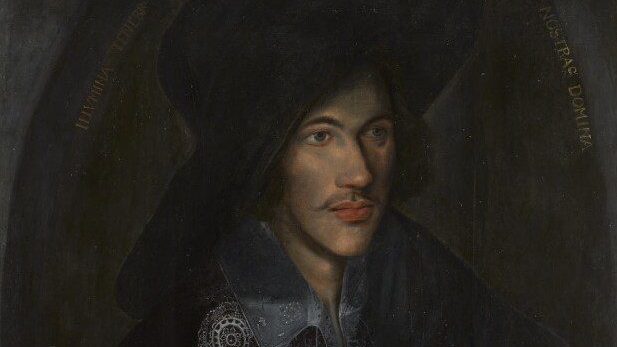
John Donne (1572–1631) was an English poet, preacher, and scholar, and is widely regarded as the foremost of the Metaphysical poets. Across love lyrics, religious verse, and some of the greatest sermons of his age, he transformed English poetry through bold intellect, dramatic immediacy, and the startling extended metaphors — “conceits” — that fuse passion with argument.
His life divides almost in two: the witty, worldly young poet of the 1590s who wrote audacious poems of love and seduction, and the grieving, devout cleric who became Dean of St Paul’s Cathedral and meditated on faith and mortality. That same restless mind runs through both halves, joining sensual experience to spiritual inquiry. Largely unpublished in his lifetime, Donne was rediscovered in the twentieth century and now stands among the most original voices in English literature.
ON THIS PAGE
Early Life and Education · Literary Career and Major Works · Style, Themes, and Influence · Later Life and Legacy · Notable Poems · Frequently Asked Questions · Related Poets
Early Life and Education
Donne was born in London in 1572 into a devout Roman Catholic family, at a time when England’s penal laws made open Catholic practice dangerous. His father, a prosperous ironmonger also named John, died when the boy was only four; his mother, Elizabeth Heywood, was the daughter of the playwright John Heywood and a great-niece of Sir Thomas More — a lineage that bound the family to the old faith and its persecutions. That danger was no abstraction: Donne’s younger brother Henry died of plague in prison in 1593, having been arrested for sheltering a Catholic priest.
Donne entered Hart Hall, Oxford, around the age of eleven, and is thought to have studied afterward at Cambridge, but as a Catholic he could take no degree — graduation required an Oath of Supremacy acknowledging the monarch as head of the Church. He went on to study law at Lincoln’s Inn from 1592, where he read widely in literature, theology, and philosophy and began writing the witty, argumentative poetry that would make his name among friends. In the late 1590s he sailed on the English naval expeditions to Cádiz and the Azores, then secured a promising post as secretary to Sir Thomas Egerton, Lord Keeper of England.
Literary Career and Major Works
Donne’s poetry is often split into two phases, the secular and the divine. The poems of the 1590s broke sharply from the smooth, melodious lyricism of his Elizabethan contemporaries. In their place he wrote compact, intellectually charged verse driven by paradox and surprising metaphor — the “metaphysical conceits” that later critics would name. Poems such as “The Flea,” “The Sun Rising,” and “The Good-Morrow” treat love with a mixture of sensuality, wit, and philosophical daring that still feels startlingly modern.
His prospects collapsed in 1601 when he secretly married Anne More, the young niece of Egerton’s wife. The match enraged her father, cost Donne his position, and briefly landed him in prison; years of insecurity and dependence followed. Over time his writing turned from earthly love toward faith and mortality, producing the searching Holy Sonnets — including “Death, Be Not Proud” and “Batter My Heart” — as well as the compass-and-lovers conceit of “A Valediction: Forbidding Mourning.” After much hesitation, and under steady pressure from King James I, Donne was ordained an Anglican priest in 1615. His prose masterpiece, Devotions upon Emergent Occasions (1624), written during a grave illness, contains the famous lines “No man is an island” and “never send to know for whom the bell tolls; it tolls for thee.”
Style, Themes, and Influence
What sets Donne apart is the marriage of reason and feeling. His poems frequently open in mid-argument — an oath, a question, a command — and then drive toward their conclusion through tightly reasoned stages, treating abstract thought with dramatic urgency. The hallmark device is the conceit: an elaborate, often far-fetched comparison sustained at length, whether likening two parting lovers to the legs of a drawing compass or the lovers’ faces to two hemispheres of a single world. These figures ask the reader to think as well as feel, and that demand is the source of the poems’ lasting energy.
Donne’s recurring themes — the unity of body and soul, the rivalry of earthly and divine love, and the ever-present fact of death — give his work a psychological depth that can feel remarkably contemporary. For generations after his death his reputation faded, dismissed by critics who preferred smoother verse. Then, in the early twentieth century, poets and critics led by T. S. Eliot championed him, prizing exactly the difficulty and intellectual force earlier readers had resisted. Eliot’s praise restored Donne to the center of the canon, and his influence on modern poetry has remained strong ever since.
Later Life and Legacy
Donne’s turn to the church was shadowed by grief. In 1617 his wife Anne died at thirty-three after giving birth to their twelfth child; devastated, Donne vowed never to remarry and gave himself wholly to his vocation. His sermons soon made him the most celebrated preacher of his day, a favorite of both James I and Charles I. In 1621 he was installed as Dean of St Paul’s Cathedral, a position he held until his death, drawing vast congregations with the same emotional gravity and verbal brilliance that mark his verse.
In his final illness he rose from his sickbed in early 1631 to preach his last sermon, Death’s Duel, so unflinching a meditation on mortality that listeners called it his own funeral sermon. He died in London on 31 March 1631, aged fifty-nine, and was buried in St Paul’s, where his monument — a statue of the poet rising in his burial shroud — famously survived the Great Fire of London in 1666. His love poems were collected and published two years after his death as the Songs and Sonnets. Today Donne is honored as the founder of the Metaphysical school and one of the boldest, most enduring voices in English poetry.
Notable Poems
A handful of poems that show the range of Donne’s wit and devotion:
- The Good-Morrow: Two lovers wake into a love so complete it makes one little room an everywhere.
- The Sun Rising: A playful dawn poem that scolds the sun for daring to disturb the lovers’ bed.
- The Flea: A witty, audacious seduction argument spun entirely from a single flea bite.
- Death, Be Not Proud: A defiant Holy Sonnet that taunts death itself as merely a short sleep before eternal waking.
- The Canonization: A passionate defense of love as something sacred, the lovers worthy of being made saints.
Frequently Asked Questions
A few of the questions readers most often ask about John Donne and his work:
What is John Donne best known for?
Donne is best known as the leading Metaphysical poet, celebrated for love poems such as “The Good-Morrow” and “The Sun Rising,” for his religious Holy Sonnets like “Death, Be Not Proud,” and for his sermons. The lines “No man is an island” and “for whom the bell tolls” come from his prose Devotions upon Emergent Occasions.
Why is John Donne called a “metaphysical” poet?
The term describes a group of 17th-century poets whose work blends intense emotion with intellectual argument and elaborate, surprising metaphors called “conceits.” Donne is their foremost figure: his poems reason their way through feeling, comparing lovers to compasses or hemispheres. The label was applied later, and not always kindly, but it has come to define his distinctive method.
Did John Donne write “No man is an island”?
Yes. The phrase comes from Meditation XVII of his Devotions upon Emergent Occasions (1624), a prose work rather than a poem. The same passage contains “never send to know for whom the bell tolls; it tolls for thee,” which later gave Ernest Hemingway the title of his novel For Whom the Bell Tolls.
What religion was John Donne?
Donne was born into a prominent Roman Catholic family at a time of harsh anti-Catholic laws in England. He later conformed to the Church of England, and after years of hesitation was ordained an Anglican priest in 1615, eventually rising to become Dean of St Paul’s Cathedral.
Related Poets
Poets who shared Donne’s metaphysical wit or carried his influence forward:
- George Herbert: The great devotional poet of the Metaphysical school, whose sacred verse owes much to Donne.
- Andrew Marvell: A later Metaphysical poet best known for the dazzling argument of “To His Coy Mistress.”
- Henry Vaughan: A Welsh poet of luminous religious vision who openly modeled his work on Donne and Herbert.
- John Milton: The towering poet of the next generation, whose ambitious religious verse closed out Donne’s century.