

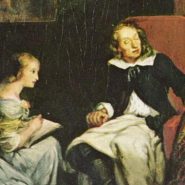

To the Virgins, to Make Much of Time
Robert Herrick’s “To the Virgins, to Make Much of Time” urges readers to seize youth and beauty before time fades them away.
The Ballad of the Oysterman
Oliver Wendell Holmes Sr.’s “The Ballad of the Oysterman” tells a haunting tale of love, jealousy, and loss along a moonlit river.
On This Day I Complete My Thirty-Sixth Year
Explore Wordsworth’s “On This Day I Complete My Thirty-Sixth Year”, a meditation on age, reflection, nature, and ethical living.
A Bird Came Down the Walk
Explore Emily Dickinson’s “A Bird Came Down the Walk”, a lyric about observation, nature, and the delicate interplay between humans and the natural world.
The Soul Selects Her Own Society
Explore Emily Dickinson’s “The Soul Selects Her Own Society”, a meditation on autonomy, personal choice, and the sovereignty of the inner life.
Ode: Intimations of Immortality (Excerpt)
Explore Wordsworth’s “Ode: Intimations of Immortality”, a meditation on childhood, memory, and nature’s role in guiding the human spirit.
Lines Written in Early Spring
Explore Wordsworth’s “Lines Written in Early Spring”, a reflective poem on nature, human folly, and moral insight. Discover its meaning, themes, and beauty.
My Heart Leaps Up
Explore Wordsworth’s “My Heart Leaps Up”, a short poem celebrating the joy of nature, continuity from childhood to adulthood, and the enduring power of wonder.
Sonnet 87
Explore Shakespeare’s Sonnet 87, a meditation on love’s fragility, personal merit, and the bittersweet art of letting go. Discover its meaning and themes.
Sonnet 10
Explore Shakespeare’s Sonnet 10, where beauty carries moral responsibility. Discover its meaning, themes, and lessons on selfishness, legacy, and love.
Sonnet 70
Explore Shakespeare’s Sonnet 70, where beauty provokes both praise and envy. Discover its meaning, themes, and lessons on dignity and resilience.
Sonnet 9
Explore Shakespeare’s Sonnet 9, where beauty and responsibility collide. Discover its meaning, themes, and the moral message about legacy and immortality.